Data & Analytics

Working with Dell Technologies and NVIDIA, the French supermajor is targeting improved seismic processing and artificial intelligence applications.

A discussion at the inaugural executive breakfast convened by the SPE Data Science and Engineering Analytics Technical Section, held alongside CERAWeek by S&P Global and powered by Black & Veatch, tackled the challenge of value creation from artificial intelligence in the energy industry.

AI‑driven data center growth is straining US power grids and accelerating interest in enhanced geothermal systems as a scalable, low‑carbon solution.
-
 The two companies announced a 10-year partnership to work on digital solutions to challenges including carbon capture, storage, and use.
 -
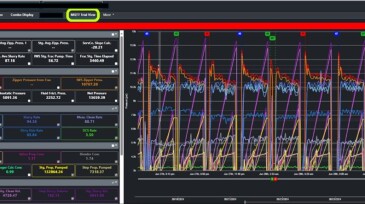
Intelligent Wellhead Systems and ProFrac Services say the new method simplifies and streamlines data transfer during hydraulic fracturing.
-
The RoboWell technology for well control will be available globally through Halliburton’s Landmark iEnergy hybrid cloud.
-
A self-updating and customizable data-driven strategy for real-time monitoring and management of screenout, integrated with proppant filling index and safest fracturing pump rate, is proposed to improve operational safety and efficiency at field scale.
-
Automated workflow unifies geological, completion, and production data to inform speedier, better investment decisions for nonoperated assets.
-
The authors of this paper review the advantages of machine learning in complex compositional reservoir simulations to determine fluid properties such as critical temperature and saturation pressure.
-
Digital transformation presents a crucial opportunity to cut costs across business domains. This review explores unique digital transformation opportunities in the petroleum industry, highlighting valuable business process automations that can drive significant benefits.
-
The oil and gas industry can leverage advanced AI and generative AI to bridge knowledge gaps, enhance decision making, and improve safety. These tools will boost efficiency and productivity, leading to a smarter and more resilient industry.
-
Both new and old vessels are benefiting from automation processes that can improve operational efficiency, predict downtime, and debottleneck workflows using a flurry of crucial data points.
-
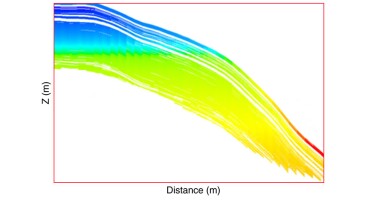
A seismic prediction model is developed and presented in a case study to simulate the magnitude and timing of triggered seismic events with the intent to manage and mitigate environmental impacts resulting from induced seismicity during subsurface development activities.