Data & Analytics

This research focuses on combining physics-based expert rules with machine learning to improve the detection of failure-related events in electrical submersible pumps.

A combination of physics principles and machine-learning techniques is used in this work to develop a virtual flowmeter for oil-production optimization in electrical-submersible-pump-lifted oil wells, resulting in reliable generalization.

This paper presents the deployment of an artificial intelligence-enabled autonomous gas lift optimization system, integrating real-time centralized advanced process control with cloud-based analytics to enhance artificial gas lift performance in producer wells.
-
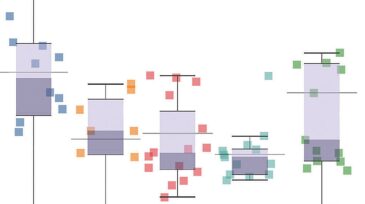
 If design A yields the same 90-day production at 10% lower cost in a series of wells than design B wells, is design A the better one? Using pressure-based fracture measurements, the separability of variables between two completion designs can be evaluated.
 -
For the upstream industry, where improvement in efficiency or production can drive significant financial results, there is no question that the size of the digital prize is huge. So are the challenges.
-
This paper discusses a prescriptive analytics framework to optimize completions in the Permian Basin.
-
A group of people who really care how drillers code the memos added to the daily drilling report is the data scientists—who find that the coded tags do not match the activity. A program that helps drillers code is one of three technologies featured in a JPT series on drilling measurement innovation.
-
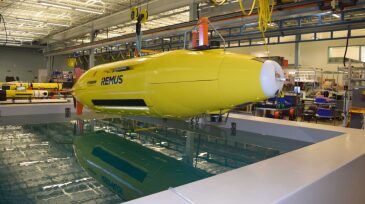
Fugro and SEA-KIT’s partnership will develop unmanned vessels, while HII and Kongsberg will market naval and maritime products.
-
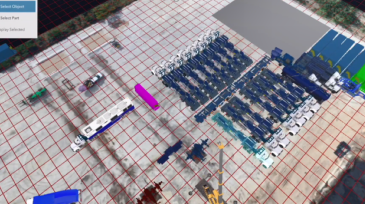
Immersive technology on projects such as wellsite planning incorporates XR, drones, and collaboration.
-
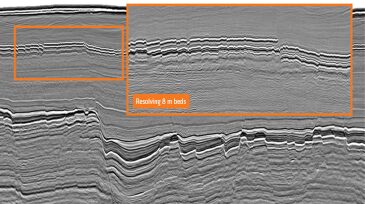
An ultrahigh-density high-resolution data set from the Hammerfest Basin is now available from PGS. The area is thought to contain around half of the undiscovered resources on the Norwegian continental shelf, according to the Norwegian Petroleum Directorate.
-
Modeling immensely complex natural phenomena such as how subatomic particles interact or how atmospheric haze affects climate can take hours on even the fastest supercomputers. Now, work posted online shows how AI can easily produce emulators that can accelerate simulations by billions of times.
-
Moving away from siloed organization to the co-creation of an IT/business strategy is an important progression in the journey of digital transformation.
-
Switching to remote working because of the coronavirus can create cybersecurity problems for employers and employees. Here are some things to watch.