Data & Analytics

After years of market shocks, technological breakthroughs, and rising uncertainty, ATCE 2026 will provide new insights on how industry leaders and technical experts are preparing for the next era of the upstream business.

This research focuses on combining physics-based expert rules with machine learning to improve the detection of failure-related events in electrical submersible pumps.

This paper presents the deployment of an artificial intelligence-enabled autonomous gas lift optimization system, integrating real-time centralized advanced process control with cloud-based analytics to enhance artificial gas lift performance in producer wells.
-
 The international energy company will use Amazon Web Services to reduce IT infrastructure costs and develop systems for carbon removal plants.
 -
The high-speed, low-latency communication offered by 5G is enabling real-time data transmission and remote control of operations, thereby reducing the need for human presence in hazardous areas.
-
The venture will deploy Eni's real-time, pipeline-integrity monitoring system.
-
Geochemical parameters such as total organic carbon (TOC) provides valuable information to understand rock organic richness and maturity and, therefore, optimize hydrocarbon exploration. This article presents a novel work flow to predict continuous high-resolution TOC profiles using machine learning.
-
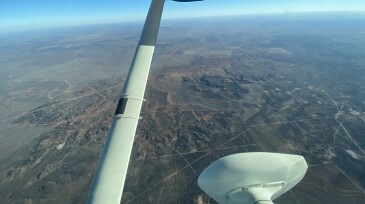
Two wings and a few hours can replace dozens of boots and many months in site selection, planning, and management.
-
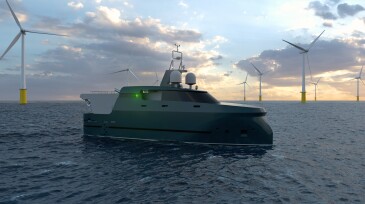
Norway’s USV joint venture will launch its first unmanned offshore surface vessel in 2025 to support subsea inspection, maintenance, and repairs.
-
The industry's increasing dependence on digital systems has escalated the importance of robust cybersecurity strategies, presenting an array of unprecedented challenges.
-
SPE and Project Innerspace are organizing the first Geothermal AInnovation Competition. Teams from around the world are invited to participate in this virtual competition aimed at showcasing the potential of AI-assisted work flows in the geothermal life cycle.
-
The Brazilian major said it plans to integrate the software throughout its exploration, development, and production operations.
-
The US-based drilling contractor is buying the drilling technology company just three weeks after announcing a merger with NexTier Oilfield Solutions.