Data & Analytics

After years of market shocks, technological breakthroughs, and rising uncertainty, ATCE 2026 will provide new insights on how industry leaders and technical experts are preparing for the next era of the upstream business.

This research focuses on combining physics-based expert rules with machine learning to improve the detection of failure-related events in electrical submersible pumps.

This paper presents the deployment of an artificial intelligence-enabled autonomous gas lift optimization system, integrating real-time centralized advanced process control with cloud-based analytics to enhance artificial gas lift performance in producer wells.
-
 Whether inconsistent, incomplete, ambiguous, or just plain wrong, bad data is a big barrier to digital transformation.
 -
University of Houston researchers develop oil recovery tools with ‘significantly higher accuracy’ than current methods.
-
The Landmark DecisionSpace Geosciences software aims to incorporate geoscientists into the company’s digital work flow.
-
Artificial intelligence (AI) tools have been used in geological survey methods for many years. Gaining insight into the scale and trends of this implementation could assist surveyors in making informed decisions about buying or developing new technologies.
-
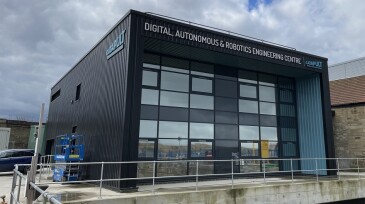
The center will allow developers and researchers to test digital and robotic products and services for offshore renewable energy.
-
Oil and gas operators such as Shell and Oxy are now employing AI together with a vast network of sensors and other machine-learning software to stamp out problems before they happen.
-
Premier Corex and Teverra will be combining their efforts to aggregate data for companies involved in large-scale geothermal projects.
-
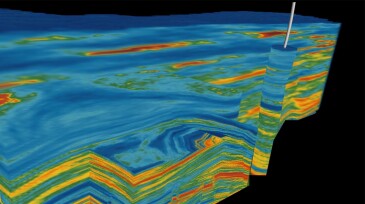
The artificial intelligence technology is expected to increase understanding of subsurface structures.
-
The collaboration expects to redefine methane detection and contribute to emission-reduction efforts across dozens of industries, including energy, agriculture, manufacturing, and transportation.
-
This article presents a deep-learning approach, the long short-term memory network, for adaptive hydrocarbon production forecasting that takes historical operational and production information as input sequences to predict oil production as a function of operational plans.