Data & Analytics

After years of market shocks, technological breakthroughs, and rising uncertainty, ATCE 2026 will provide new insights on how industry leaders and technical experts are preparing for the next era of the upstream business.

This research focuses on combining physics-based expert rules with machine learning to improve the detection of failure-related events in electrical submersible pumps.

A combination of physics principles and machine-learning techniques is used in this work to develop a virtual flowmeter for oil-production optimization in electrical-submersible-pump-lifted oil wells, resulting in reliable generalization.
-
 So far, digital twins have focused mainly on mimicking small, well-defined systems. Integrated asset models, however, tend to address the bigger picture. In this video, Distinguished Lecturer Kristian Mogensen addresses whether we can take the best from both worlds, whether we need to, and how to go about developing such a technical solution.
 -
SponsoredWhy oil and gas companies can’t get the data they need for production optimization (and how to change that).
-
New research led by the University of Glasgow’s School of Psychology and Neuroscience presents an approach to understand whether the human brain and deep neural networks recognize things in the same way.
-
As we continue to reduce our reliance on fossil fuels, we risk becoming more vulnerable if we don’t start associating climate resiliency with cyber resiliency.
-
Founded by former analytics experts for a large US independent, Xecta Digital Labs is proposing a new analysis method for horizontal wells. Adopting it means turning the page on some old habits.
-
The authors of this paper develop a model that can predict well-risk level and provide a method to convert associated failure risk of each element in the well envelope into a tangible value.
-
This paper presents agile technologies that integrate data management, data-quality assessment, and predictive machine learning to maximize asset value using underused legacy core data.
-
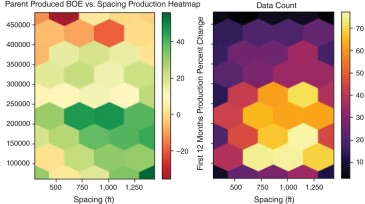
The authors write that child-well performance increases with spacing and decreases with infill timing and that the parent cumulative production at child-well completion is an effective indicator of child-well performance.
-
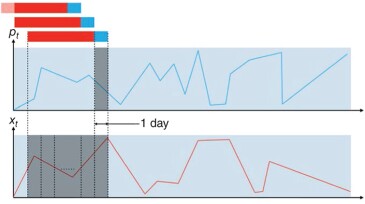
The authors of this paper propose a novel approach to data-driven modeling for transient production of oil wells.
-
A just-launched publicly available database translates reserves and production data into greenhouse-gas emissions as CO2 equivalents. It was built using data from more than 50,000 fields in 89 countries, which covers about 75% of global reserves, production, and emissions.