Data & Analytics

Switching from continuous circulation to cyclic huff-‘n’-puff operation in enhanced geothermal systems can significantly delay thermal breakthrough, sustain higher production temperatures, and improve long-term economic performance.

The two companies say they plan to work together to use agentic AI to increase the capabilities of technical experts.

This article is the first in a Q&A series from the SPE Methane Emissions Management Technical Section (MEMTS) on methane intelligence and how oil and gas teams translate emissions data into credible decisions and measurable reductions.
-
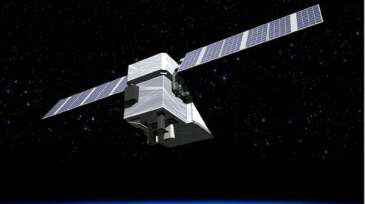
 A new generation of detectors will be many times better at tracking discharges of the dangerous greenhouse gas.
 -
C3 AI reported that the oil major has hit the milestone of 10,000 pieces of equipment being monitored by its predictive-maintenance artificial intelligence.
-
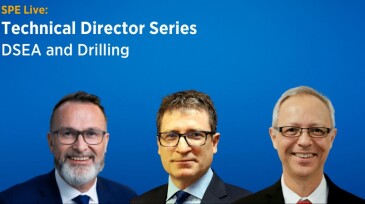
SPE Technical Directors Silviu Livescu and David Reid talk about the intersection of AI and drilling.
-
Schlumberger announced that ConocoPhillips will use its DELFI platform to move its data to the cloud.
-
A recent survey sponsored by ABS Group revealed that 45% of participants estimate the threats to their control systems are high and another 15% said they were severe or critical.
-
The authors write that the application of electrical parameters to diagnose working conditions and meter production of pumping wells is the key to the low-cost Internet-of-Things construction.
-
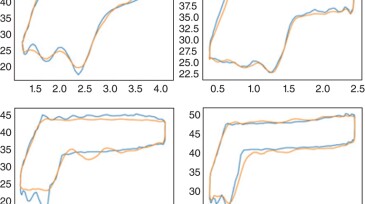
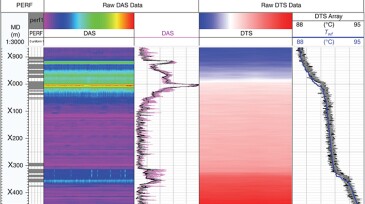
This paper describes a novel machine-learning approach for processing distributed fiber-optic sensing data that enables dynamic flow-profile monitoring using a fiber-optic electric-line cable deployed in a gas condensate well.
-
The authors provide a comparison of wireless telemetry methods and discuss potential improvements to existing systems.
-
The paper describes a project automating the progressing-cavity-pump well-modeling process wherein models are built and sustained automatically in a well-management system for all active PCP wells.
-
Rodolfo Camacho-Velázquez identifies areas of opportunity for future reservoir engineers related to the technical challenges of increased production and recovery of complex conventional and unconventional reservoirs, the application of Fourth Industrial Revolution technologies in reservoir subdisciplines, and the energy transition.