Data & Analytics

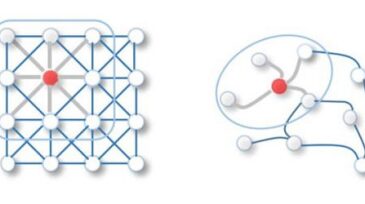
Switching from continuous circulation to cyclic huff-‘n’-puff operation in enhanced geothermal systems can significantly delay thermal breakthrough, sustain higher production temperatures, and improve long-term economic performance.
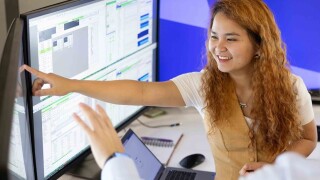
The two companies say they plan to work together to use agentic AI to increase the capabilities of technical experts.

This article is the first in a Q&A series from the SPE Methane Emissions Management Technical Section (MEMTS) on methane intelligence and how oil and gas teams translate emissions data into credible decisions and measurable reductions.
-
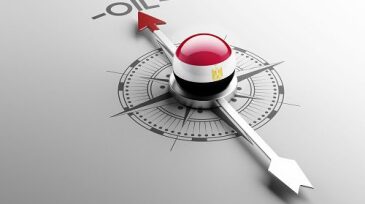
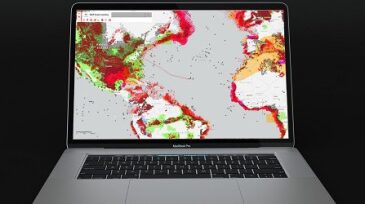
 Egypt Upstream Gateway, a national project for digitizing subsurface information and delivering a digital subsurface platform, will build on Schlumberger’s GAIA digital subsurface platform.
 -
Despite getting less attention, the systems-level design and engineering challenges in machine learning are still very important. Creating something useful requires more than building good models; it requires building good systems.
-
A recent ransomware attack caused a US natural gas compressor facility to shut for 2 days, the latest in a string of attacks targeting the country’s energy infrastructure over the past few years.
-
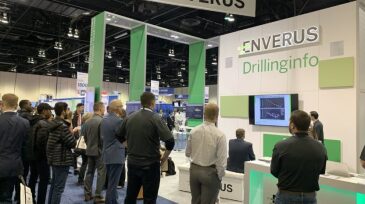
The provider of subscription-based analytics services for the North American oil and gas sector continues its streak of purchasing data-focused firms.
-
Aker BP showcased the Spot robot recently. Spot will be part of the company's initiative that will explore how robotics systems can be used to make offshore operations safer.
-
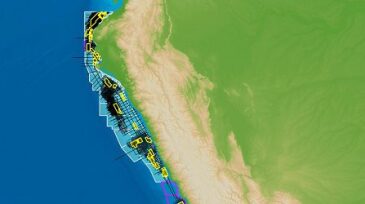
The seismic-data company has announced the completion of its offshore Peru 2D and 3D seismic data set, consisting of 19 rectified and merged 2D seismic surveys and 21 rectified and merged 3D seismic surveys.
-
Petroweb, a provider of global E&P data cataloging to the energy industry, announced the launch of its Data Curating platform, which provides a continuously up-to-date catalog of available third-party E&P data sets worldwide.
-
Many predictions have been made about what advances are expected in the field of artificial intelligence and machine learning. This column reviews a “data set” based on what researchers were apparently studying at the turn of the decade to take a fresh glimpse into what might come to pass in 2020.
-
Using the supplied data set of cone penetration test results, competing teams had to predict the number of hammer blows required to drive the pile a given unit of depth in the North Sea.
-
HML methods have become common in recent applications. We have probably been using some of them without realizing it. It is, however, necessary to know about them in the context of understanding the underlying concepts of their methods and how they work.