Decarbonization

Winners of Alberta's Drilling Technology Challenge cover a range of technologies from robotics to enhance drilling rig safety to AI-enabled energy management, downhole sensing, well navigation, hybrid power systems, and geothermal energy.

Located along the North Sea, the Humber is expected to play a central role in the UK’s effort to achieve a net-zero emissions status by 2050.

The firm’s latest analysis puts the bulk of the blame on a fragmented supply chain.
-
 SponsoredDiscover how TAQA’s sustainable products are transforming cementing operations, reducing environmental impact, and enhancing performance.
 -
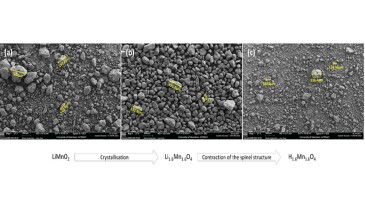
This paper presents an evaluation of the lithium potential of assets in the North Sea.
-
To choose the right technologies for a gas-compression package, it’s critical for operators to have a clear understanding of their business and greenhouse‑gas emissions-related goals. Operators also need clarity concerning the impact of evolving requirements on total cost of ownership as well as potential financial ramifications.
-
The goal of the project described in this paper was to test the added value of shear-wave velocity interpreted from underwater multichannel analysis surface waves, particularly as a propagation tool of geotechnical information.
-
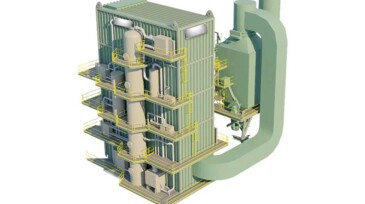
This paper describes the design of compact carbon-capture modules, including post-combustion CO₂ removal process technology, for applications on offshore facilities.
-
Carbon storage specialist Storegga joins Petronas and ADNOC in a joint study to strategize the build-out of Malaysia’s offshore as a regional CCS hub.
-
H2Teesside is expected to be one of the UK’s largest low-carbon hydrogen production facilities, targeting 1.2 GW of low-carbon hydrogen production, which equates to more than 10% of the UK’s 2030 hydrogen production target.
-
Proving that green hydrogen can efficiently power steel pipe manufacturing could advance the EU’s plan to decarbonize its heavy industry by importing the sustainable fuel from North Africa after 2030.
-
Cost concerns temper public appetite for clean energy while companies struggle to find investors for projects.
-
Transition requires action, not perfect technology, but challenges remain around scalability, cost, and revenues.