Decarbonization
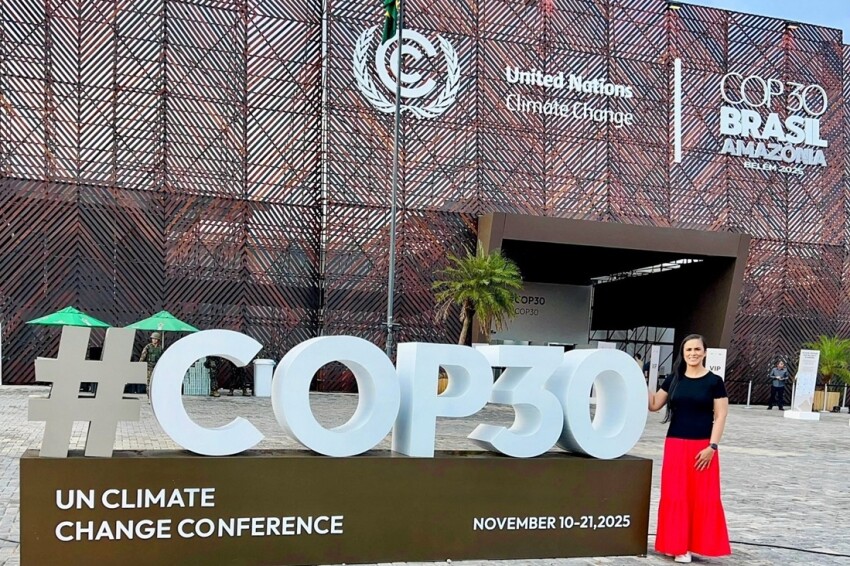
As COP30 wrapped up in Brazil, the country finds itself at an inflection point, positioned to deliver South America’s first CO₂ injection by mid-2026.
The 14 available locations are estimated to be able to provide up to 2 gigatonnes of additional carbon-dioxide storage capacity.

The authors state that issues faced by the Gorgon carbon capture and storage project primarily relate to risk and pressure management of the produced water from the Dupuy formation rather than from capture, transport, injection, and storage technologies.
-
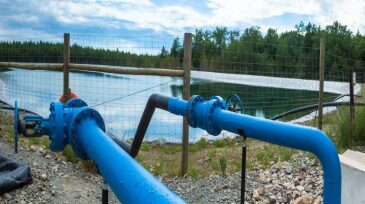
 Researchers at Texas A&M University have developed a method of refining "liquid gold" for valuable critical minerals using what many consider traditional waste products: produced water and carbon dioxide.
 -
With the advancement of a legal framework for carbon capture and storage, Brazil is building CCS momentum. This article aims to shed light on what led to this momentum and what may come next.
-
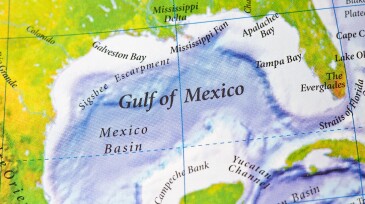
The Gulf region can leverage its energy history, infrastructure, capacity, and expertise to lead the energy transition.
-
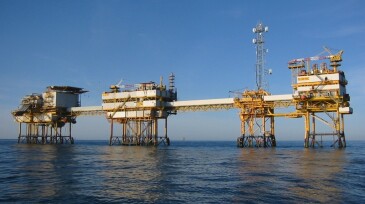
The project aims to store 5 million tons of CO₂ annually, equivalent to a third of the total CO2 emissions from Dutch domestic vehicles in 1 year.
-
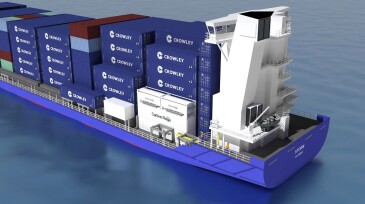
A pilot project will explore onboard carbon capture for container ships, and two heavy-hitters are teaming up to find decarbonization paths in the Asia Pacific region. Elsewhere, wind and solar are on track to pass coal in the race to generate electricity.
-
The memorandum of understanding aims to improve digital work flows in the emerging carbon capture and storage industry.
-
For today’s oil and gas companies, digital twins offer untapped potential to decarbonize the leading source of their emissions—field production.
-
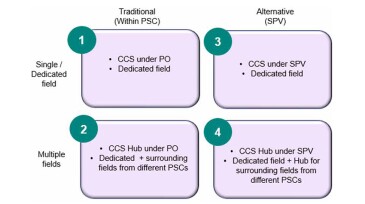
This study compares, in a carbon capture and storage (CCS) context, the economics of a traditional business model vs. an alternative business model (a regional CCS hub separately managed by a special-purpose vehicle).
-
A surge in permit applications for long-term carbon storage sites reflects where industrially produced carbon dioxide can be harvested, and where the necessary pipelines are.
-
The captured carbon dioxide will be permanently sequestered in the Cameron Parish CO2 Hub to be located offshore Louisiana.