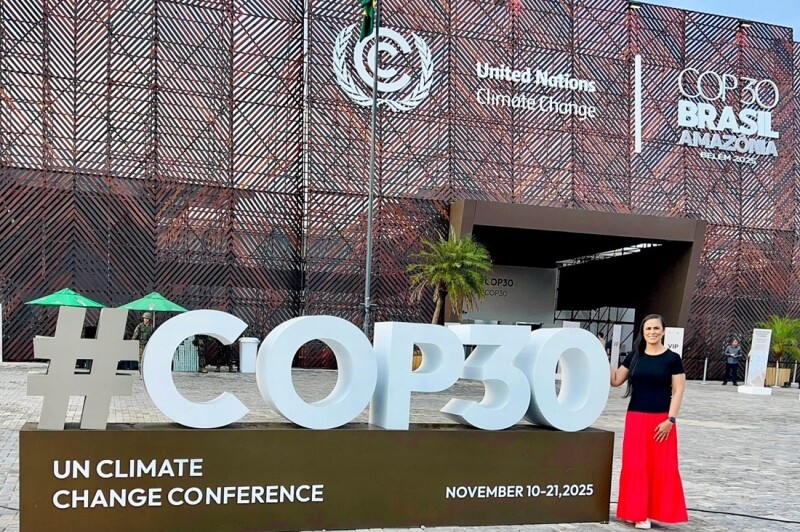
In the wake of the UN Climate Change Conference COP30 held in Brazil, the nation now stands before a final gate, where regulation, investment, and implementation converge, positioning the country to deliver South America’s first CO₂ injection by mid-2026. This injection timeline, reaffirmed following the UN convening, marks a pivotal inflection point.
During COP30, Brazil also advanced a key regulatory step when the Government’s Ministério de Minas e Energia (MME) opened public consultation No. 205 on 17 November on a draft decree governing carbon capture and storage (CCS) and CO₂ use, moving the 2024 CCS law from policy intent closer toward an enforceable framework for project authorization.
The decree has already catalyzed low-carbon capital flow. TotalEnergies has advanced an offshore CCS program valued at over $155 million dollars, reflecting early market response from a company with direct operational experience, including CO₂ injection in the North Sea in 2025 via Northern Lights. In parallel, Petrobras’ 2026–2030 Business Plan allocates approximately 14% of its $6.4 billion decarbonization portfolio to CCS, CO₂ use, and other related activities, placing this category within the company’s defined low-carbon investment mix.
The public consultation has already received authenticated submissions numbering in the dozens and remains open through 16 December, creating a narrow but decisive window to shape South America’s regulatory frontier.
A Novel CCS Engine: How Institutional Sequencing Accelerates Deployment
Against this regulatory and investment convergence, the mechanism translating intent into execution becomes clear for Brazil’s sovereign sequestration pathway. The draft decree was prepared, as acknowledged by the Brazilian government, by a CCS Technical Executive Subcommittee established in July 2025 that defined the operational framework for carbon capture, transport, and geological storage in Brazil. As a result, the public consultation is anchored in a sequenced and intentional operational architecture rather than open-ended guidance.
The subcommittee includes the Society for Low Carbon Technologies (SFLCT), an international nongovernmental organization (of which the author is the chairman), alongside collaborative stakeholders such as TotalEnergies, Petrobras, Innovation Norway, and Empresa de Pesquisa Energética.
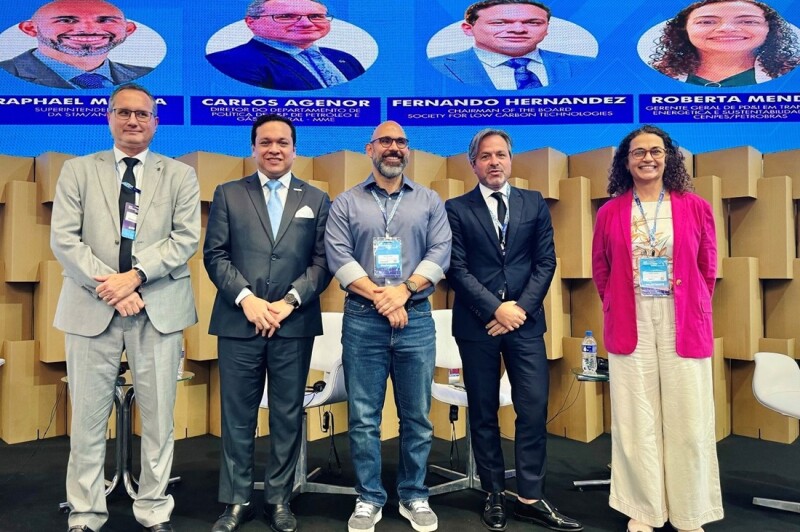
FS Energia also participates in the subcommittee and has progressed the nation’s first CCS project under provisional authorization rather than finalized regulation, a status that the decree’s final form, once ratified, is designed to inform and regularize. The company has confirmed plans to commence CO₂ injections, without enhanced oil recovery (EOR), in mid-2026, based on a project initiated in 2021. This decree-to-consultation sequence aligns technical implementation, operational readiness, regulatory awareness, and social legitimacy into a focused pathway. Ahead of Brazil’s CCS public consultation, SFLCT convened industry, academia, students, and civil society in Rio de Janeiro, helping strengthen regulatory literacy and institutional readiness before the decree was published.
One notable provision currently under assessment via the decree that may shape future projects defines the “pressure front” as the outer boundary of increased subsurface pressure created by CO₂ injection, effectively marking the zone of potential influence associated with injection into the geological storage reservoir. Additionally, the National Agency of Petroleum, Natural Gas, and Biofuels (ANP), Brazil’s federal hydrocarbons and biofuels regulator, participates in the subcommittee and, under the draft decree, is designated as the statutory authority responsible for overseeing CCS regulation.
Taken together, this provision establishes a defined regulatory zone of influence for CO₂ injection while aligning oversight with a single statutory authority.
An Ongoing Case Study
To date, FS Energia remains the only geological CO₂ storage project operating under a pilot-based authorization pathway overseen by ANP, functioning as a first-of-kind proving ground where statutory authority, provisional oversight, and market participation converge. The project’s 2021 initiation legitimacy was further reinforced following the enactment of Brazil’s 2024 CCS law, which included institutional participation from SFLCT.

As such, FS Energia stands as the clearest live test of Brazil’s CCS framework moving from design to execution, including the application of a monitoring, measurement, and verification framework and alignment with US Environmental Protection Agency Class VI practice. Consistent with the decree, permanent geological storage for emissions mitigation is treated separately from CO₂ associated with EOR, which remains subject to distinct approvals under existing oil and gas law. This sequestration separation mirrors the US regulatory framework, under which EOR-related injection is regulated through Class II wells, while permanent, non-EOR geological storage falls under the Class VI program. For context, Class VI was first applied in 2017 by Archer Daniels Midland and follows the same ethanol-to-CCS pathway now being pursued by FS Energia, indicating alignment across the two leading ethanol producers.
Notably, FS Energia has confirmed it will proceed without EOR, with a disclosed sequestration value of approximately $150 per tonne, exceeding the $85 per tonne incentive available in the US under the Inflation Reduction Act (IRA) for Class VI wells. While the decree does not yet specify monetization mechanisms comparable to those established under the IRA, its regulatory architecture enables the conditions under which financial incentives can be operationalized via governmental channels once formally introduced.
Regulatory Importance
Under the draft decree, regulatory authority for CCS activities is placed with the ANP, tasking it with authorizing, overseeing, and regulating CCS operations, with whom the SFLCT has engaged on regulatory discussion predating the public consultation.
The draft decree establishes a two-phase approval framework for geological CO₂ storage, covering research and evaluation, followed by operational deployment. The decree further introduces a minimum 20-year post-decommissioning monitoring obligation, requiring operators to demonstrate long-term CO₂ plume stability before authorization may be concluded. This requirement defines the minimum durability threshold for regulatory closure.
Although the decree sets a default 20-year monitoring period, it allows that requirement to be shortened if operators can demonstrate long-term plume containment and pressure stability ahead of schedule. Although the decree has not yet been finalized, this regulatory action has already clarified Brazil’s sovereign CCS deployment trajectory, with material implications for future projects.

Closing
This government-led decree, advancing from subcommittee design to public consultation, aligns technical implementation, operational readiness, regulatory awareness, and social legitimacy into a single execution pathway. This sequencing is novel for South America within the CCS domain and has the potential to shape regional deployment while offering a replicable template globally.
Its potential ratification following the consultation window will be decisive, shaping Brazil’s emerging CCS framework and demonstrating how institutional sequencing, paired with technically grounded oversight, can build regulatory capacity in real time. Nations that delay establishing robust regulation risk losing projects and capital to jurisdictions operating at market speed. By contrast, regulatory architectures that embed enforceability protect the natural environment while preserving an investment window that is finite, competitive, and nonperpetual. Lastly, the final shape of this decree is subject to potential change, which is crucial to note, but what does not change is the nation’s progression on CCS.