Decarbonization

Winners of Alberta's Drilling Technology Challenge cover a range of technologies from robotics to enhance drilling rig safety to AI-enabled energy management, downhole sensing, well navigation, hybrid power systems, and geothermal energy.

Located along the North Sea, the Humber is expected to play a central role in the UK’s effort to achieve a net-zero emissions status by 2050.

The firm’s latest analysis puts the bulk of the blame on a fragmented supply chain.
-
 This paper describes a method with multitiered analysis to leverage machine-learning techniques to process passive seismic monitoring data, pumping and injection pressure, and rate for fracture and fault analysis.
 -
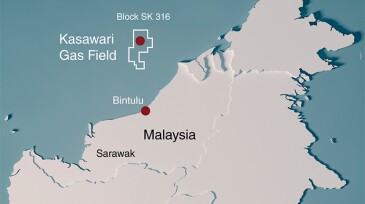
The contractor will be responsible for both pipeline and platform installation related to Petronas’ ambitious CCS project offshore Sarawak.
-
The project’s revised development plan now incorporates a carbon capture facility.
-
Thailand’s national petroleum exploration and production company plans to team with Japanese oil and gas company INPEX to study the feasibility of a carbon storage hub in the northern Gulf of Thailand.
-
The US Environmental Protection Agency has signed a final rule granting the state’s request for primary responsibility for the permitting, compliance, and enforcement of carbon sequestration wells under the Underground Injection Control Program.
-
Researchers at Texas A&M University have developed a method of refining "liquid gold" for valuable critical minerals using what many consider traditional waste products: produced water and carbon dioxide.
-
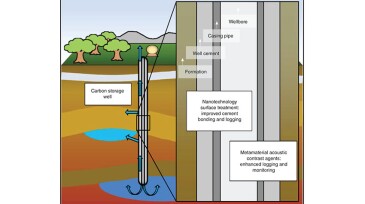
The authors of this paper describe a suite of technologies that enables enhanced well robustness and performance modeling and monitoring of carbon storage facilities.
-
With the advancement of a legal framework for carbon capture and storage, Brazil is building CCS momentum. This article aims to shed light on what led to this momentum and what may come next.
-
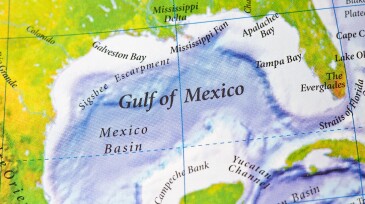
The Gulf region can leverage its energy history, infrastructure, capacity, and expertise to lead the energy transition.
-
The project aims to store 5 million tons of CO₂ annually, equivalent to a third of the total CO2 emissions from Dutch domestic vehicles in 1 year.