Decarbonization

The AI revolution isn't just digital. This article examines how geology underpins the convergence of AI, energy, carbon management, and the infrastructure powering frontier LLMs.

Winners of Alberta's Drilling Technology Challenge cover a range of technologies from robotics to enhance drilling rig safety to AI-enabled energy management, downhole sensing, well navigation, hybrid power systems, and geothermal energy.

Located along the North Sea, the Humber is expected to play a central role in the UK’s effort to achieve a net-zero emissions status by 2050.
-
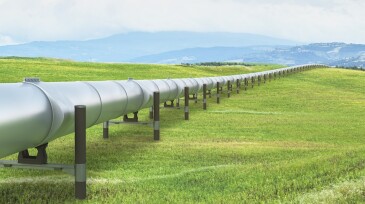
 While the world focuses on carbon dioxide—its problems and its uses—many are looking at how to move it around. Fortunately, a pipeline infrastructure already exists. Unfortunately, the pipelines were made for natural gas and not enough is known about how that infrastructure can handle carbon dioxide.
 -
Moji Karimi, CEO of Houston-based startup Cemvita Factory, talks about the status of oil and gas investments in the emergent technology arena of carbon capture, utilization, and sequestration.
-
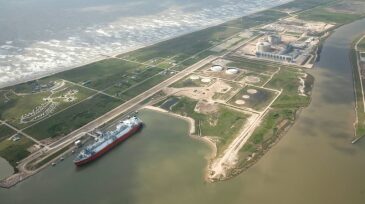
Companies join forces in carbon capture project near LNG facility.
-
The supermajor and service company that have long been partners on oil and gas projects said they are exploring new models to fit the energy transition. They also separately announced this week new plans to expand into the hydrogen market.
-
The international consultancy has agreed with Russia’s Rosneft to evaluate the state-owned major’s carbon capture potential.
-
Talks between the operators of a trio of competing projects remain active as Canada looks to cut emissions by 40% over the next decade.
-
The Russian oil and gas company is combining its experience with that of the leading nuclear-power producer to develop hydrogen and decarbonization projects on Sakhalin Island.
-
In this paper, a complete safety-management approach and a contingency plan are developed for carbon dioxide waterless fracturing operations.
-
The national oil company plans to tap into what is claimed to be the world's largest single-site solar power plant and the region's first nuclear power plant to decarbonize its operations.
-
The company said it expects to increase its annual carbon captured by approximately 1 million metric tons at its LaBarge facility with a $400 million investment.