Decarbonization

The AI revolution isn't just digital. This article examines how geology underpins the convergence of AI, energy, carbon management, and the infrastructure powering frontier LLMs.

Winners of Alberta's Drilling Technology Challenge cover a range of technologies from robotics to enhance drilling rig safety to AI-enabled energy management, downhole sensing, well navigation, hybrid power systems, and geothermal energy.

Located along the North Sea, the Humber is expected to play a central role in the UK’s effort to achieve a net-zero emissions status by 2050.
-
 Eni plans to reuse depleted hydrocarbon reservoirs in Liverpool Bay to permanently store CO2 captured in northwest England and North Wales.
 -
The oil major said it will now work with Global Thermostat on technology that would remove carbon dioxide directly from the air.
-
Phase 1 involved a feasibility study for a facility capable of capturing 750,000 tonnes of carbon dioxide annually. The next phase will explore building a facility capable of more than twice that amount.
-
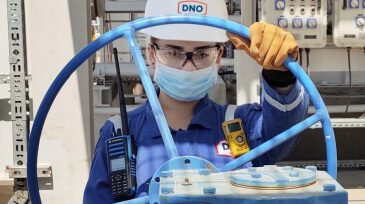
DNO announced that it has brought its gas capture and injection program online in the Kurdistan region of Iraq. Already reaching the milestone of 1 Bcf of gas injected, the project is expected to reduce annual emissions from the company’s production by more than 300,000 tonnes of CO2 equivalent.
-
The tech giant and supermajor have been working on cloud solutions already, but in a new agreement, they will combine their talents to create new technologies for oil and gas as well as energy consumers.
-
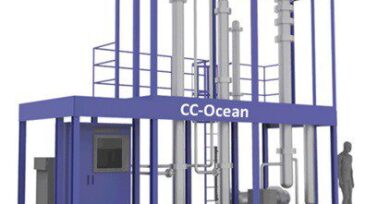
The project aims to identify risks and conduct operability and safety evaluations for the world’s first attempt at capturing carbon dioxide at sea.
-
Tellurian CEO Meg Gentle outlined how the US LNG market should address expected tight market conditions through 2025 while managing a transition to a carbon neutral environment.
-
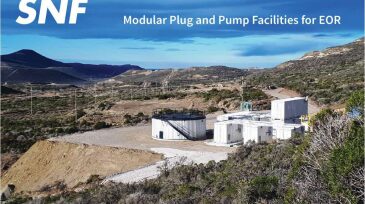
SponsoredPolymer flooding increases the RF up to 20% at $3 to $6 per extra bbl of oil. It also contributes towards reducing CO2 emission by 3–6 times per bbl. It’s a proven technology with more than 300 projects worldwide. SNF offers modular plug and pump facilities connected to existing infrastructure.
-
Through a combination of reducing operational emissions and offsetting projects, the shale-gas producer has set a new benchmark for its sector.
-
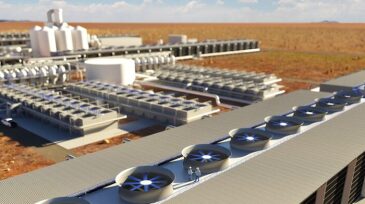
Oxy Low Carbon Ventures and Rusheen Capital Management have formed a development company to finance the world’s largest carbon-dioxide-capturing facility using Carbon Engineering’s direct air capture technology.