Decarbonization

The AI revolution isn't just digital. This article examines how geology underpins the convergence of AI, energy, carbon management, and the infrastructure powering frontier LLMs.

Winners of Alberta's Drilling Technology Challenge cover a range of technologies from robotics to enhance drilling rig safety to AI-enabled energy management, downhole sensing, well navigation, hybrid power systems, and geothermal energy.

Located along the North Sea, the Humber is expected to play a central role in the UK’s effort to achieve a net-zero emissions status by 2050.
-
 A new type of porous material called a covalent organic framework quickly sucks up carbon dioxide from ambient air.
 -
As the initiative expands to include Oil India Limited, PetroChina, and Vår Energi, it identifies a need for standardized methodologies to enhance data quality and consistency.
-
With emissions mineralization established as a proven approach, the companies’ next objective is to move the underlying technology toward commercial success.
-
This paper describes a project in the heavy oil Captain field in the UK sector of the North Sea in which reduced environmental impact dovetails with improved economics.
-
The road to a low-carbon world is paved with more than just shiny new facilities and the promise to deliver impressive CO₂ reductions from the atmosphere. Without the software to site, monitor, and maintain those facilities, the drive for net zero would be stuck in neutral.
-
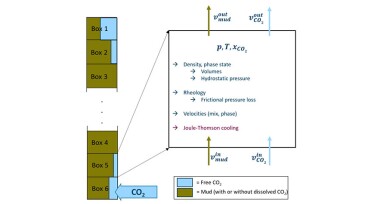
This paper aims to close some of the many knowledge gaps that exist in the field of drilling CO₂ storage wells, a task that is expected to involve handling an influx of CO₂ into the drilling fluid.
-
This paper describes a polymer-injection pilot in the Chichimene heavy oil field in Colombia.
-
Consulting and engineering firm Wood is leading a joint industry partnership to create industry guidelines for carbon dioxide specifications to accelerate sustainable carbon capture, use, and storage projects.
-
The $220-million carbon capture and storage project is one of the world's largest, with a nameplate injection capacity of 1.7 mtpa.
-
The agreement with state officials comes more than 3 years after the supermajor proposed building the world's largest carbon storage hub offshore the Houston area.