Decarbonization

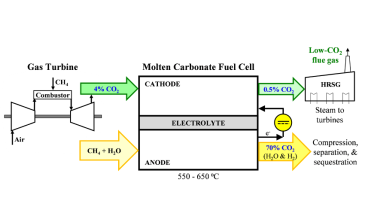
This paper presents a flexible, highly cost- and energy-efficient method of gas separation and CO₂ capture from many different gas mixtures with a large range of CO₂ concentrations.

This study explores the carbon-capture and mineralization potential of ultramafic rock powders when exposed to flue gases generated from combustion of crude oil and mesquite-derived charcoal.

This paper presents an approach for safe, efficient, and cost-effective legacy well reabandonment.
-
 At COP28, more than 50 oil and gas companies took a historic step toward decarbonization by launching the Oil & Gas Decarbonization Charter. This article explores the importance of this effort, the opportunities available to the industry to reduce its Scope 1 and 2 emissions, and the key technologies needed to achieve the net-zero goal.
 -
To meet the objective of balancing economic prosperity, energy security, and environmental protection, a natural gas gasification process within a downhole completion tool is proposed that converts methane wells into hydrogen production wells, while simultaneously capturing the process-generated carbon downhole and reinjecting the carbon dioxide into the surrounding g…
-
If optimized to scale, fast fission reactors could play a role in reducing emissions in field operations by producing carbon-free electricity.
-
The updated joint development agreement allows the companies to carve out new markets while they complete pilot testing at a demonstration plant in the Netherlands.
-
The project will implement two distinct carbon technologies aimed at capturing and storing carbon dioxide. Svante’s CEO Claude Letourneau describes his company’s solid-sorbent technology used in collaboration with Climeworks, one of the awarded companies.
-
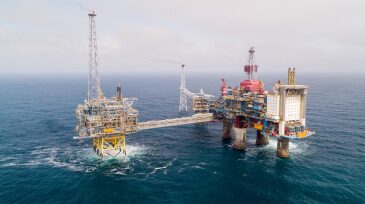
Electric conversion of these offshore platforms is expected to cut about 1.2 million tonnes of CO₂ emissions per year.
-
The US supermajor aims to speed the commercialization of a new liquid solvent that strips carbon dioxide from industrial flue gas.
-
This paper describes a chemical-free process with a small footprint designed to capture exhaust from natural gas drive compressors and supporting gas-fueled production equipment.
-
Jim Gable, president of Chevron Technology Ventures, shares how CTV works with startups and how their technologies go big.
-
The partnership seeks to shift the economics of carbon capture across high-emitting industrial sectors.