Decarbonization

This paper presents a flexible, highly cost- and energy-efficient method of gas separation and CO2 capture from many different gas mixtures with a large range of CO2 concentrations.

This study explores the carbon-capture and mineralization potential of ultramafic rock powders when exposed to flue gases generated from combustion of crude oil and mesquite-derived charcoal.

This paper presents an approach for safe, efficient, and cost-effective legacy well reabandonment.
-
 This paper reviews the simultaneous supercritical CO2/brine aquifer injection and water-alternating-gas methods for geologic carbon sequestration and proposes a novel integration with saltwater-disposal wells.
 -
In the past year, publications on CO2, natural gas, and hydrogen storage have increasingly focused on the design, evaluation, and optimization of storage plans. These efforts encompass a broad spectrum of challenges and innovations, including the expansion of storage reservoirs from depleted gas fields and saline aquifers to stratified carbonate formations and heavy-o…
-
In this paper, the authors review and draw lessons from the many firsts in the Teesside CO2 transportation and storage infrastructure project.
-
Block Energy announced the completion of its carbon capture and storage pilot study, confirming the viability of the field for permanent carbon storage.
-
DNV awarded the Abu Dhabi National Oil Company a storage certificate at the endorsement stage for its West Aquifer site.
-
A DNV report on decarbonization says the Middle East and North Africa region is expected to become the world’s largest hydrogen exporter by 2060 while maintaining a dominant position in global oil and gas markets.
-
A final investment decision is also expected by the end of the year for the company’s first low-carbon data center project.
-
The North Sea Transition Authority has updated its UKCS Well Applications and Consents Guidance to include the process for applying for consent to drill carbon-storage wells.
-
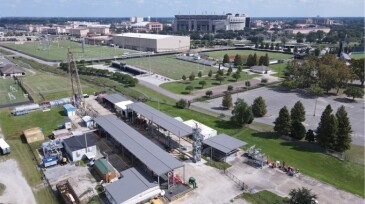
For more than a century, LSU has shaped petroleum engineering education, but few assets showcase its impact like the PERTT Lab. With six deep test wells and rare reservoir-depth gas-injection capabilities, the facility is helping drive breakthroughs in well control, carbon-dioxide injection, and next-generation energy technologies.
-
This study identifies critical knowledge gaps in wellbore integrity and underscores areas that require further investigation, providing insights into how wellbores must evolve to meet the technical demands of the energy transition.