Decarbonization

This study explores the carbon-capture and mineralization potential of ultramafic rock powders when exposed to flue gases generated from combustion of crude oil and mesquite-derived charcoal.

This paper presents an approach for safe, efficient, and cost-effective legacy well reabandonment.

This paper presents a flexible, highly cost- and energy-efficient method of gas separation and CO₂ capture from many different gas mixtures with a large range of CO₂ concentrations.
-
 This paper addresses the difficulty in adjusting late-stage production in waterflooded reservoirs and proposes an integrated well-network-design mode for carbon-dioxide enhanced oil recovery and storage.
 -
This work presents the development of fast predictive models and optimization methodologies to evaluate the potential of carbon-dioxide EOR and storage operations quickly in mature oil fields.
-
The authors of this paper apply a deep-learning model for multivariate forecasting of oil production and carbon-dioxide-sequestration efficiency across a range of water-alternating-gas scenarios using field data from six legacy carbon-dioxide enhanced-oil-recovery projects.
-
This paper assesses the technical feasibility of geological carbon storage in the operator’s Brazilian brownfields, focusing on mature oil fields and associated saline aquifers.
-
This study illustrates the new capabilities, tailored for carbon-dioxide storage applications, of a modeling framework that provides a quantitative, risk-based assessment of the long-term integrity of legacy plugged and abandoned wells.
-
The latest corporate plan drops the amount the company says it will invest in low-carbon efforts by $10 billion from last year’s plan.
-
Following the start of injection in August, Northern Lights has issued the first set of certificates documenting that the carbon dioxide captured from the Heidelberg Materials cement factory has been transported and stored permanently in the Aurora reservoir.
-
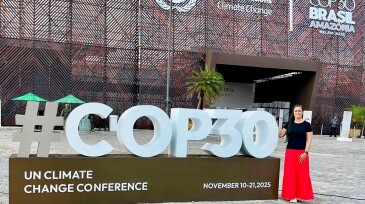
As COP30 wrapped up in Brazil, the country finds itself at an inflection point, positioned to deliver South America’s first carbon-dioxide injection by mid-2026.
-
The 14 available locations are estimated to be able to provide up to 2 gigatonnes of additional carbon-dioxide storage capacity.
-
The authors state that issues faced by the Gorgon carbon capture and storage project primarily relate to risk and pressure management of the produced water from the Dupuy formation rather than from capture, transport, injection, and storage technologies.