Decommissioning

The North Sea Transition Authority has published its first table identifying 13 operators that are behind schedule in decommissioning their inactive North Sea wells.

Estimates commissioned by the Australian government suggest that increasing efficiency will lower costs for decommissioning offshore Australia.

Marine contractor also approves the construction of a new heavy-transport ship.
-
 Decommissioning costs are often made higher by decisions made during the initial engineering and construction stages of an offshore oil or gas field. Designing with a critical eye can go a long way toward reducing the decommissioning costs, which occur decades later.
 -
Industry perceives decommissioning projects as more risky and uncertain than capital projects. Several recent decommissioning projects delivered in an immature marketplace seem to support this view.
-
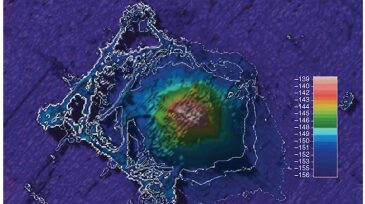
Advances in modeling techniques allow quantitative prediction of long-term trends in cuttings-pile characteristics and environmental risks, providing firm direction in mitigating risks.
-
The great majority of wells do not pollute.
-
P&A activities using digital slickline increase equipment, logistic, and marine-support efficiency.
-
The Hadrian-5 prospect in the US Gulf of Mexico was drilled in approximately 7,000 ft of water as one of the first Gulf of Mexico wells drilled after a deepwater moratorium was imposed after the Macondo disaster.
-
Industry has overcome the technical challenges with decommissioning in shallow water. But as deepwater structures require removal, a whole new set of decommissioning challenges will require new solutions. This article highlights some of these challenges.
-
Global decommissioning projects are ramping up as many installations near the end of their life cycle. Many operators are now planning for major removal projects. Changes in technology and regulations have caused operators to make significant shifts in well abandonment operations.
-
Regulations are driving increased decommissioning activities in the Gulf of Mexico. Incomplete data is one of the obstacles in planning decommissioning. As fields have changed ownership over time, key information has been lost, creating challenges for the current operator.