Decommissioning
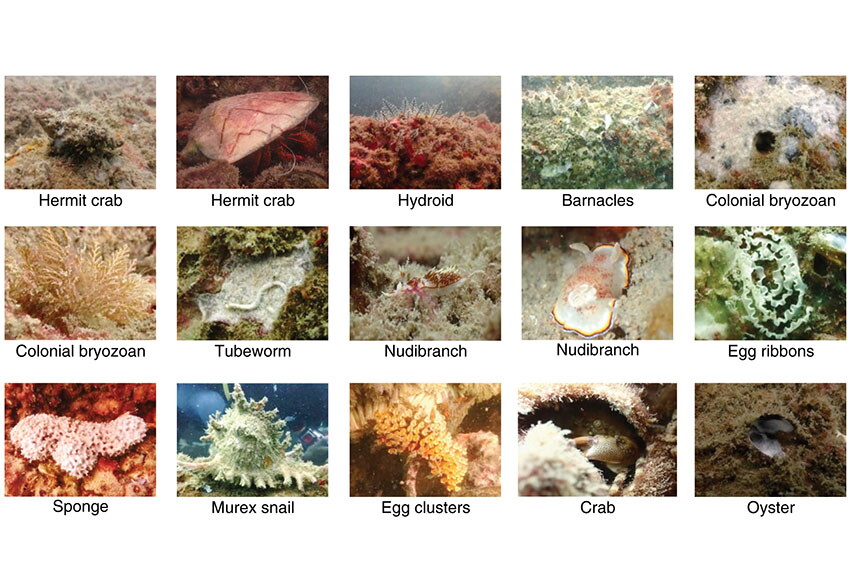
This paper reviews a proof-of-concept project in which surplus casing pipes were used in the fabrication of purposefully designed artificial reef structures for the enhancement of biodiversity and commercial fisheries.

ABL’s Australia unit will provide marine warranty survey services to support the first phase of Esso’s decommissioning campaign, which aims to recycle 95% of the 60,000 tons of offshore structures targeted for removal.

Despite a 2.8% drop in liquefied natural gas exports in 2025 because of lost market share in China, Australia anticipates a 2026 rebound as new North West Shelf capacity comes online. Meanwhile, East Coast operators brace for a tsunami of wells entering the decommissioning pipeline and potential energy shortfalls necessitating LNG imports.
-
 With $102 billion of decommissioning-related expenditure forecast to 2040 in Western Europe, opportunities are ripe for the supply chain to compete with innovative and cost-effective solutions for the E&P operators.
 -
The shutting in of unprofitable offshore wells and the requirements for their plugging and abandonment is attracting more attention to what is being done with the associated subsea equipment. The benefits of leaving subsea systems in place vs. recovering them are being considered.
-
A new downhole-tool-based abandonment system was developed and deployed successfully on four wells for a major operator on a field in the North Sea.
-
The supply chain is now actively working to develop low-cost solutions and is gaining valuable experience through recent projects (as documented in many recent SPE papers). Owners need to engage the supply chain early with the relevant asset data for planning and execution of decommissioning.
-
The optimization model presented in the complete paper is the first multioperator offshore network-optimization model that considers decommissioning in the Netherlands.
-
The complete paper describes how various P&A designs can be compared by use of a risk methodology that takes account of degradation mechanisms, potential flow rates, and the effect on the environment.
-
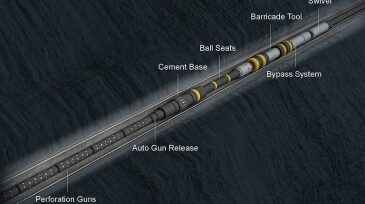
Archer’s Stronghold Barricade well decommissioning system leaves the casing in place, while perforating, washing, and cementing the annulus to create a cement barrier in a single trip.
-
Decommissioning experts in the UK examine the advantages and disadvantages of removing offshore installations vs. leaving them in place, discussing cost efficiencies, environmental factors, and long-term risks.
-
The circular economy approach to decommissioning brings a new perspective that considers reuse and regeneration as critical aspects to be considered along with other matters from the earliest stages of designing and constructing assets.
-
Decom North Sea has developed the Late Life Planning Portal system, a web-based information portal, to capture tools that add value as well as good practices and lessons learned from the execution of decommissioning projects.