Decommissioning

This paper identifies opportunities and risks associated with repurposing an offshore oil and gas platform for green hydrogen production. Various technical scenarios were investigated for the case study platform, and their profitability was determined using economic calculations. In addition, all the submodels were compared with standard decommissioning costs for reco…

This paper presents an approach for safe, efficient, and cost-effective legacy well reabandonment.

This paper uses the structural-integrity-management framework to evaluate the current structural integrity of chosen platforms, highlighting their potential and limitations for carbon capture, use, and storage purposes based on in-service assessments.
-
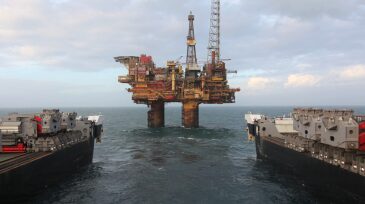
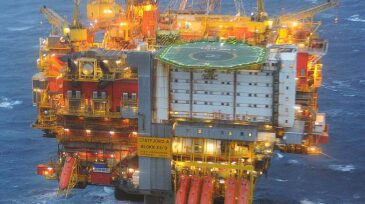
Repsol has awarded Allseas an EPRD contract for the removal, transfer, load-in to shore, and disposal of its Gyda platform in the Norwegian North Sea. The contract covers the 18,000-ton topsides and 11,200-ton jacket, along with an option for reinstallation on another field.
-
 With production declining and a nearby terminal closed, UK authorities have given the nod for decommissioning to begin on the aging North Sea gas field. Perenco has been in operation since 1992, with Perenco taking over as operator from BP in 2003.
-
The decision comes a year after Neptune stopped production from the North Sea gas field, and 4 months after it submitted decommissioning plans to the UK authorities.
-
A new regulation includes provisions related to the timely abandonment of "dormant sites," a new site classification that refers to inactive wellsites operated by solvent companies.
-
Bravo is the second of four platforms to be decommissioned and removed from the Brent field, following Brent Delta in 2017. The field has produced approximately 3 billion boe since 1976.
-
After producing for 43 years, the Statfjord A platform will cease production in 2022.
-
This paper demonstrates a new way to create gas-tight seals during well abandonment, overcoming the limitations of traditional methods and reducing the operator’s liability and potential environmental impact after decommissioning has been completed.
-
Decommissioning and abandonment comes with its share of unexpected surprises, but many of those surprises could be avoided merely through better planning and care.
-
The next big wave of decommissioning and abandonment projects is set to occur in the Asia-Pacific region, and APAC’s operators are now tasked with finding cost- and time-effective ways of unwinding their huge agglomeration of wells and facilities.
-
This paper discusses studies conducted on two California offshore fields that may be abandoned in the near future. These studies examined the feasibility of repurposing these fields for offshore gas storage by using their reservoir voidage and existing pipeline facilities.