Digital Oil Field

A combination of physics principles and machine-learning techniques is used in this work to develop a virtual flowmeter for oil-production optimization in electrical-submersible-pump-lifted oil wells, resulting in reliable generalization.

This research focuses on combining physics-based expert rules with machine learning to improve the detection of failure-related events in electrical submersible pumps.

This paper presents the deployment of an artificial intelligence-enabled autonomous gas lift optimization system, integrating real-time centralized advanced process control with cloud-based analytics to enhance artificial gas lift performance in producer wells.
-
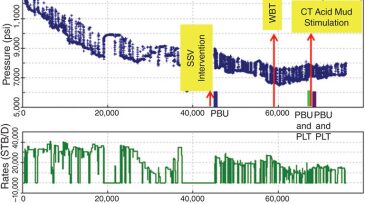
 A case study in the deepwater Gulf of Mexico in which pressure transient analysis, fractional flow, and production logging tools were integrated to identify correctly the cause of, and execute an effective remedy for, a well’s productivity deterioration.
 -
The large independent put together a team of data scientists, software developers, and petrotechnical staff to create a forward-looking vision for how to use digital technology to solve problems.
-
Photogrammetry—stitching together images to create photorealistic 3D models—can be part of a larger industrial digitalization strategy that aims to liberate data from its silos, connect it to other relevant information, and make it available to the workers who need it.
-
In recent times, we have been inundated with articles concerning the oil and gas industry’s race toward digitalization and automation. The pillars of such a transformation are the rapidly evolving industrial Internet of things, secure cloud computing, data analytics, AI, and machine learning.
-
Baker Hughes is still a GE company, but it has partnered with a second company for artificial intelligence expertise, C3.ai. The deal is expected to speed the integration of AI into oilfield operations by the company which also markets GE’s device analytics platform, Predix.
-
Marathon Oil says its shale fields are producing more oil and gas with less hands-on work from company personnel thanks to a growing arsenal of digital technologies and workflows.
-
Malaysia’s Petronas, Shell Malaysia, and Thailand’s PTTEP are now in the midst of full-scale digital adoption. The companies are beginning to see results, but none is counting on a “big bang” in development of the technology soon.
-
Analytics, sensors, and robots are changing the way one of the world’s largest oil and gas companies does business. Underpinning all the new technology though is a shift in how BP thinks, and what it means to be a supermajor in the 21st century.
-
Adoption of digital technologies will continue to improve the offshore sector, including improved well efficiency, real-time directional drilling, lower maintenance costs, and safer operations.
-
The authors of this paper propose a novel work flow for the problem of building intelligent data analytics in heavy-oil fields.