Digital Oil Field

The Seismos full-scale research center opens to industry, universities, and national laboratories, advancing acoustic sensing across upstream energy, pipelines, critical infrastructure, and national security.

This research focuses on combining physics-based expert rules with machine learning to improve the detection of failure-related events in electrical submersible pumps.

A combination of physics principles and machine-learning techniques is used in this work to develop a virtual flowmeter for oil-production optimization in electrical-submersible-pump-lifted oil wells, resulting in reliable generalization.
-
 As E&P companies slowly ramp up drilling and production activities while adjusting to a new period of “lower for longer” prices, the time is right for widespread adoption of the IoT.
 -
Digitization in oil and gas is entering a new era thanks to the increased capabilities and lower cost of huge computing power
-
With the availability of more-complex smart-well instrumentation, immediate evaluation of the well response is possible as changes in the reservoir or well occur.
-
The complete paper evaluates optimization techniques to develop, or support, business cases for intelligent or smart wells.
-
The most-competitive emerging systems blend artificial intelligence to bring better efficiency to the human work that results in good business decisions. As a result, we waste less time and fewer resources finding and manipulating data and focus more on complex engineering judgment.
-
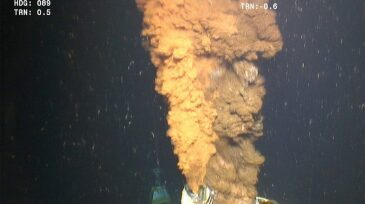
An investigator from the US National Energy Technology Laboratory examines the role remotely operated vehicles played in flow rate estimation from the Macondo well.
-
A real-time production-surveillance and -optimization system has been developed to integrate available surveillance data with the objective of driving routine production optimization.
-
This paper describes how the use of production-modeling tools, coupled with field pressure/temperature-data-acquisition systems and programming software, served as a means to improve production allocation and surveillance on a real-time basis in the Greater Angostura Field.
-
The application of high-precision downhole temperature sensors has resulted in pressure-transient analysis (PTA) being complemented or replaced by temperature-transient analysis (TTA).
-
Investment in digital technologies may increase project efficiency and reduce costs. However, Technip’s chief executive officer (CEO) said it is equally important to strengthen relationships with companies along the supply chain.