Digital Oil Field

This research focuses on combining physics-based expert rules with machine learning to improve the detection of failure-related events in electrical submersible pumps.

A combination of physics principles and machine-learning techniques is used in this work to develop a virtual flowmeter for oil-production optimization in electrical-submersible-pump-lifted oil wells, resulting in reliable generalization.

This paper presents the deployment of an artificial intelligence-enabled autonomous gas lift optimization system, integrating real-time centralized advanced process control with cloud-based analytics to enhance artificial gas lift performance in producer wells.
-
 This paper presents information regarding the installation of intelligent-well completions (IWCs) in the Lula and Sapinhoá fields of the Santos basin presalt cluster (SBPSC).
 -
The Samarang oil field, offshore Sabah, Malaysia, is undergoing a redevelopment project with integrated operations. Several work flows were designed and deployed in order to achieve an early milestone of providing real-time well-performance monitoring, surveillance, and optimization.
-
In the past decade, fiber-optic -based sensing has opened up opportunities for in-well reservoir surveillance in the oil and gas industry. In this paper, the authors present a recent example of single-phase-flow profiling with distributed acoustic sensing.
-
Despite the recent market conditions during the last year, our industry continued to demonstrate further advances in the monitoring and surveillance field and to attest to the added value provided.
-
Since 2007, an operator in Nigeria has registered a significant increase of oil-spill events caused by sabotage and oil-theft activities. The technology presented here allows detecting and locating leaks taking place at a distance from the sensor of up to 35 km.
-
For thin-oil-rim reservoirs, well placement, well type, well path, and the completion methods must be evaluated with close integration of key reservoir and production-engineering considerations.
-
Many business and digital corporations claim that between 100 billion and 200 billion devices could be connected by 2020.
-
This paper proposes a framework based on proxies and rejection sampling (filtering) to perform multiple history-matching runs with a manageable number of reservoir simulations.
-
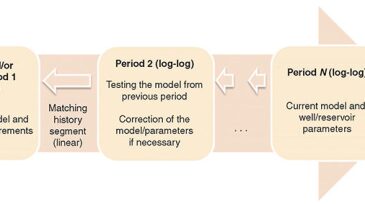
Permanent downhole gauges (PDGs) provide vast amounts of pressure-transient and rate data which may be interpreted with improved pressure-transient-analysis (PTA) approaches to gain more knowledge about reservoir dynamics.
-
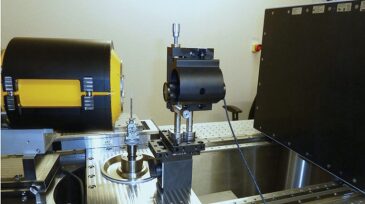
This paper describes the development of “digital-rocks” technology, in which high-resolution 3D image data are used in conjunction with advanced modeling and simulation methods to measure petrophysical rock properties.