Directional/complex wells
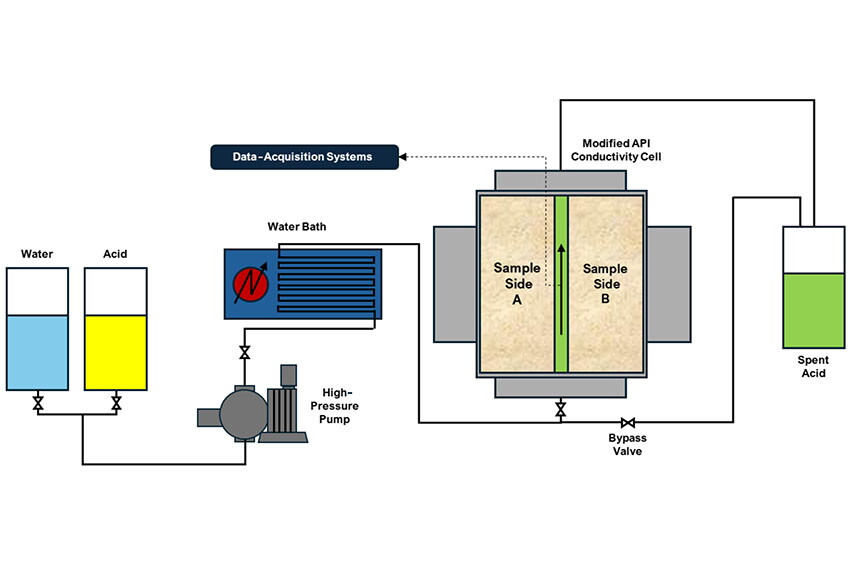
This paper presents findings reinforcing the argument that acid fracturing is a strong alternative stimulation method to improve productivity in the Austin Chalk formation.

This paper aims to assess the effectiveness of using advanced integrated production-data-analysis techniques for condensate-rich tight gas fields.

This paper presents a case study of a tool-free fishbone fracture stimulation technology using sand jetting and acidizing in openhole wells, providing a technical solution for low-permeability and complex-lithology carbonate reservoirs in the Middle East.
-
 This paper describes the first job in southeast Asia in developing horizontal-well placement in a turbidite environment.
 -
A new rotary-steerable system (RSS) was designed to give geometrically greater dogleg-severity (DLS) capability while still being able to withstand the increased bending stresses.
-
This paper explores the applications, benefits, and value of a high-build-rate rotary-steerable system (HRSS) capable of delivering dogleg severity (DLS) greater than 18°/100 ft.
-
Advances made in horizontal and complex-trajectory wells demonstrate that, despite this historic downturn, the industry has kept innovating and optimizing to bring more-efficient solutions to the table.
-
Experience has revealed that frictional pressure loss in the wellbore hinders the full use of the entire length of the horizontal well. This paper presents a new approach to maximize the use of the full length of long horizontal drainholes.
-
This study compares the performance of openhole-packer completion systems with that of cemented-liner completion systems in the northern Montney gas resource play.
-
In horizontal and extended-reach wells in which long completions are run into highly deviated or lateral zones, large compression loads arise because of running friction.
-
In organic shales, hydraulic fracturing is important for optimizing the production of horizontal wells. For a standalone lateral, the propped surface should be maximized to increase production. In the case of a pad, well spacing is an additional factor.
-
This paper offers an alternative explanation for the early boundary-dominated flow related to dissolution of salt-sealed natural fractures in the shale.
-
An analysis studied whether a well's toe could be affecting the production performance.