Drilling

This paper aims to establish a set of best practices for generating particle-size-distribution data from core samples.

This paper discusses the successful execution of two openhole gravel-pack completions in two Gulf of Mexico fields with depleted reservoirs.

This edition highlights three offshore technology papers that address a common industry theme: how targeted engineering solutions can reduce uncertainty, shorten operations, and make technically constrained offshore well activities more executable.
-
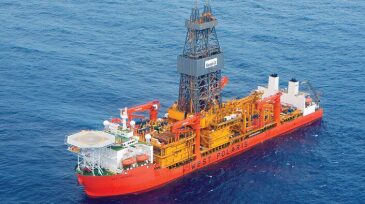
 The London-based company is seeking to restructure more than $3 billion in debt as it struggles to find work for its offshore fleet.
 -
Achieving and sustaining performance drilling’s intended benefits—improved drilling efficiency with minimal downhole tool failures and the associated reductions in project cycle time and operational costs—requires new protocols in drilling-system analysis.
-
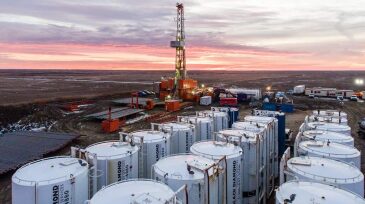
A Canadian company reports that it has drilled and completed a historic horizontal well in Saskatchewan.
-
Through the end of October, 38 rigs have been retired this year. Predicting future rig attrition is not an exact science, but certain metrics help identify those rigs.
-
There is a growing interest in using nanocomposites to improve drilling-fluid rheology. In recent years, an additive derived from a sequence of graphene-based materials has been reported. The progress of these graphene derivatives has been used as a paradigm for water-based drilling fluids.
-
Advances during the past decade in using convolutional neural networks for visual recognition of discriminately different objects means that now object recognition can be achieved to a significant extent.
-
Our understanding of drilling with better software, instrumentation, machines, computer vision, downhole tools, and robots will continue improving the economics of horizontal wells, and the trend is set to continue. This is good news for the geothermal market.
-
This paper reports the effect of sodium dodecyl sulfate modified graphene (SDS-Gr) on the rheological features, fluid loss, and swelling inhibition mechanism of clay.
-
This paper describes a low-impact, nonaqueous drilling fluid (LIDF) designed to minimize equivalent circulating density (ECD) increases and associated risks in deep water by reducing the effect of cold temperature on fluid viscosity.
-
The complete paper describes an offshore artificial island project northwest of Abu Dhabi in which drilling limits were extended continually by adopting new technologies and practices in an extended-reach-drilling (ERD) campaign.