Drilling

This paper presents the application of degradable particulate-diverter technology to improve oil production by effectively diverting stimulation treatment fluids away from high-water-cut, high-permeability, high-temperature producing intervals or zones.

This paper presents the methodology for developing drill-in organophilic clay-free invert-emulsion-fluid technology that enhances well production through fundamental geological studies and fluid testing.

This paper presents the large-scale deployment and operational integration of an advanced, automated rheometer in the Ghawar gas field, one of the world’s most prolific and technically complex hydrocarbon developments.
-
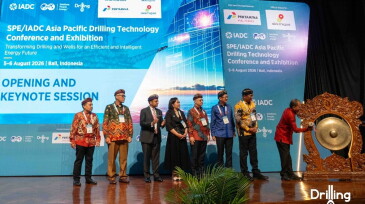
 More than 900 drilling and well professionals from 30+ countries gathered at APDT 2026 in Bali to explore how AI, automation, and advanced well technologies are driving safer, smarter, and more efficient drilling across Asia Pacific.
-
As managed pressure drilling gains traction, its principles are influencing a wider range of well-construction activities.
-
This paper presents laboratory-testing methods and evaluation criteria designed to improve understanding of both the origin and extent of formation damage associated with CO2 injection.
-
This work introduces an analytical model for nonisothermal CO2 injection that accounts for both Joule-Thomson cooling and interformation heat exchange.
-
Current classifications often do not capture the complexity of autonomy in drilling systems. By integrating concepts from aerospace, control theory, and other high-risk industries, this study presents a quantitative framework for systematically assessing and comparing levels of drilling autonomy.
-
Winners of Alberta's Drilling Technology Challenge cover a range of technologies from robotics to enhance drilling rig safety to AI-enabled energy management, downhole sensing, well navigation, hybrid power systems, and geothermal energy.
-
SponsoredEffective data analysis depends on seeing connections that matter. Explore how Spotfire enables a more intuitive approach to understanding petroleum data.
-
The company said that its AD-300, a 50-m-high automated island drilling rig that walks between wells, was delivered 3 months ahead of schedule.
-
A report commissioned by Havtil, the Norwegian Ocean Industry Authority, calls for better dialogue regarding pore-pressure uncertainty and higher-end drilling techniques like managed pressure drilling as methods to reduce the risk of well-control events.
-
This guest editorial addresses the need for high-temperature directional drilling technologies as the number of rigs used to develop next-generation geothermal wells is set to rise in the coming years.