Drilling

As Egypt’s largest oil and gas investor, Eni is ramping up its 2026–2027 drilling campaign with new investments cross the Mediterranean offshore, Nile Delta, Western Desert, and offshore Sinai to strengthen the country’s role as a regional gas and LNG export hub.

The deals, with a potential value exceeding $3.7 billion, are aimed at strengthening Saudi Aramco’s supply chains and expanding its use of industrial artificial intelligence.

Brownfield redevelopment and new exploration projects could lift Venezuelan output above 2 million B/D by next decade.
-
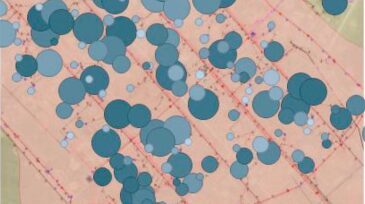
 Field N is a complex heavy-oil field in the north of the Sultanate of Oman. The dynamic behavior of Field N is characterized by strong aquifer and is dominated by bottomwater drive.
 -
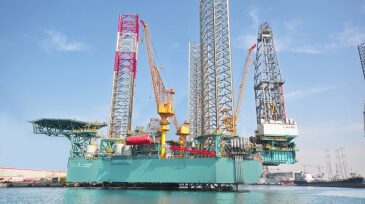
ADNOC’s drilling subsidiary has increased its rig fleet to 95 and plans to add “dozens” more by 2025.
-
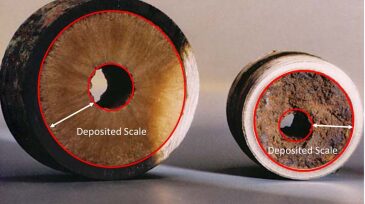
Scaling buildup inside wellbores is a serious production problem that dramatically reduces the well productivity index. This issue has a significant cost across the industry, mostly associated with loss of production or additional operations such as well intervention.
-
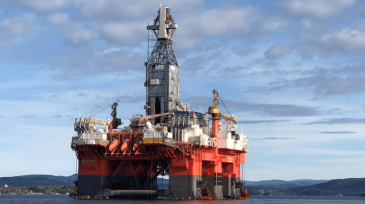
By using the four converter-battery systems, the operator estimates it will be able to reduce the runtime of the rig’s on-platform diesel engines by 42%, cutting CO2 emissions by 15% and NOx emissions by 12%.
-
This paper covers the 7-year history of drilling-fluids application in a reservoir drilling campaign offshore Abu Dhabi, from the early use of a solids-free, brine-/water-based mud to the recent application of nondamaging, nonaqueous fluids (NAFs) with micronized acid-soluble ilmenite.
-
This study focus on the design and evaluation of a customized water-based mud (NP-WBM) using silica oxide nanoparticles (SiO2-NPs) and graphene oxide nanoplatelets (GNPs).
-
Recent research has put extensive focus on the magic of graphene in drilling fluids. Graphene, because of its thermal, electrical, chemical, and mechanical properties, improves mudcake stability and minimizes fluid loss that eventually reduces formation damage.
-
The advent of the rotary-steerable system (RSS) introduced an efficient way to drill both current and future wells. However, current tools still fail to replace positive displacement motors (PDMs).
-
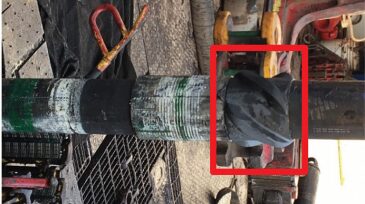
The complete paper documents the development, laboratory- and field testing, and lessons learned from a project to evaluate coated centralizers.
-
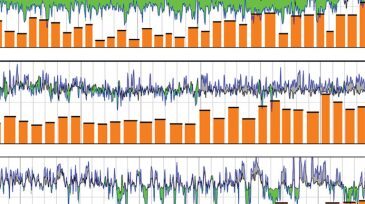
Optimizing horizontal well placement is not limited to identifying the most-favorable reservoir, but also involves identifying the ideal target window within that reservoir.