Drilling

As Egypt’s largest oil and gas investor, Eni is ramping up its 2026–2027 drilling campaign with new investments cross the Mediterranean offshore, Nile Delta, Western Desert, and offshore Sinai to strengthen the country’s role as a regional gas and LNG export hub.

The deals, with a potential value exceeding $3.7 billion, are aimed at strengthening Saudi Aramco’s supply chains and expanding its use of industrial artificial intelligence.

Brownfield redevelopment and new exploration projects could lift Venezuelan output above 2 million B/D by next decade.
-
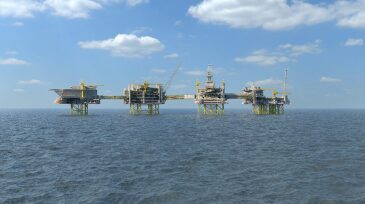
 By creating a different sort of partnership for a drilling project with close cooperation and greater efficiency built into every detail, including the contracts, Statoil was able to halve the cost of drilling eight wells at its Johan Sverdrup field.
 -
Along its journey to full-automation, the US drilling sector is facing a series of important crossroads that will determine what the so-called “rig of the future” really will be.
-
This paper presents a critical review of the recent literature to determine the status of research and development and field application of nanotechnology in the oil field.
-
The quick turnaround times and low-risk nature of shale developments need to be replicated in the deepwater business, according to the CEO of Murphy Oil.
-
Multilateral wells with smart completions controlled by different flow-control technologies offer great operational flexibility, with each lateral able to be operated and optimized independently.
-
This paper demonstrates how the latest generation of connections has been tested and validated to extreme loads before being installed in the wellbore.
-
A North Sea field development included installation of long 4½-in. completion liners in the horizontal reservoir sections of each well. To minimize overall risk, the operator planned to use managed-pressure drilling (MPD).
-
A field well was designed, built, and used to demonstrate the concept of real-time monitoring of the flow of drilling mud and smart cement and the hardening of the cement in place.
-
This paper discusses an expandable-liner-hanger (ELH) system that provides liner rotation during the liner deployment and the cementing operation while providing a hydraulically energized liner-top seal upon setting.
-
Despite cement’s remarkable properties, the search continues for enhancements in the areas of cost and isolation performance. Efficiencies and enhancements have been explored even to the point of replacing cement with other materials.