Drilling

This paper presents the methodology for developing drill-in organophilic clay-free invert-emulsion-fluid technology that enhances well production through fundamental geological studies and fluid testing.

This paper presents the large-scale deployment and operational integration of an advanced, automated rheometer in the Ghawar gas field, one of the world’s most prolific and technically complex hydrocarbon developments.

This case study from ARC Resources and DarkVision outlines the use of acoustic imaging tools in two active fracturing programs in Canada to monitor well casing deformation.
-
 Technology uptake aimed at optimizing resources, delivering consistency, and augmenting what humans can do.
-
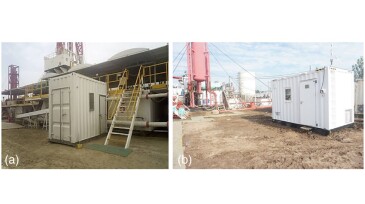
This paper highlights a new online system for monitoring drilling fluids, enabling intelligent control of drilling-fluid performance.
-
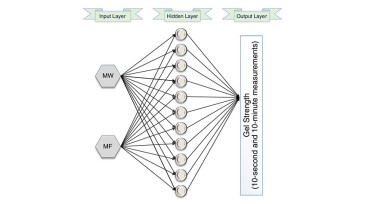
This paper investigates the use of machine-learning techniques to forecast drilling-fluid gel strength.
-
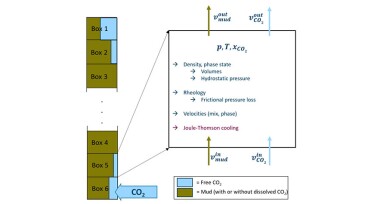
This paper aims to close some of the many knowledge gaps that exist in the field of drilling CO₂ storage wells, a task that is expected to involve handling an influx of CO₂ into the drilling fluid.
-
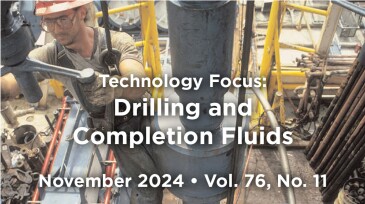
This year’s primary selections for the Drilling and Completion Fluids Technology Focus reflect now-well-established industrywide emphases on machine learning, automation, and the achievement of successful drilling of CO₂ storage wells.
-
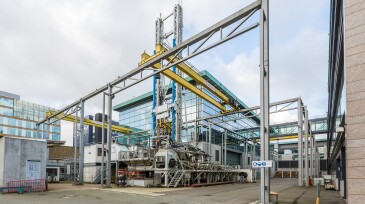
SponsoredTesting new drilling technology in a controlled and monitored environment before it is launched to its full extent in the field—that is what the Rijswijk Center for Sustainable Geo-energy is all about.
-
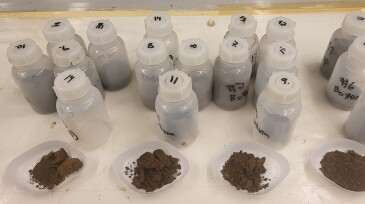
This case study investigates the reasoning behind the solidification of barite behind the casing with the aim of developing solutions for efficient casing removal and the potential use of settled barite as a barrier material.
-
Driller expects $370 million, all-stock transaction to close in early 2025.
-
We’re thrilled to announce the launch of the 2025 SPE/JPT Drilling and Hydraulic Fracturing Technology Review. This exclusive, official publication will be distributed at three major SPE industry events.
-
A fundamental research study is conducted to confirm the potential usefulness of chelating agents in dispersing settled barite, emphasize the complex nature of the factors that control this process, and provide a solid basis for future studies aimed at optimizing dispersion methods in industrial applications.