Drilling

This paper presents the application of degradable particulate-diverter technology to improve oil production by effectively diverting stimulation treatment fluids away from high-water-cut, high-permeability, high-temperature producing intervals or zones.

This paper presents the methodology for developing drill-in organophilic clay-free invert-emulsion-fluid technology that enhances well production through fundamental geological studies and fluid testing.

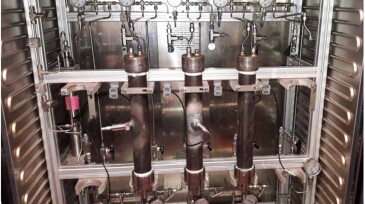
This paper presents the large-scale deployment and operational integration of an advanced, automated rheometer in the Ghawar gas field, one of the world’s most prolific and technically complex hydrocarbon developments.
-
 The objective of this paper is to review selected completions to provide insights for adoption of multilateral technologies, including lessons learned, operational experience, and recommendations.
-
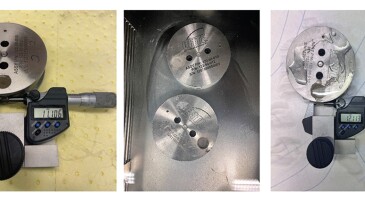
This paper compares the sealability performance of an expanding geopolymer with that of an expansive commercial cement in terms of the shear bond strength and the hydraulic bond strength at curing conditions of 25℃ and 34.5 bar.
-
This paper describes preplanning, execution, and results of drilling extended-reach wells with a large-bore design of 12¼-in. as the main stepout section and deploying 9⅝-in. casing at a shallow true vertical depth of 4,200 ft.
-
This paper presents a laboratory-based study that compares the three methods to measure static gel-strength development that are widely accepted in the industry.
-
The authors discuss a modified ultrasonic-cement-analyzer (UCA) vessel that allows assessment of slurry sealing performance under representative downhole conditions while running otherwise standard UCA equipment.
-
In 2022, the topics of the cementing and zonal isolation papers published were generally similar to those presented in previous years. A noticeable departure from previous years, however, was that many of the authors emphasized that their work would result in a reduction of greenhouse-gas emissions.
-
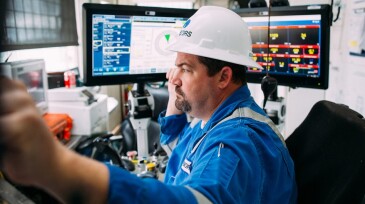
Nabors is connecting Corva’s platform to its universal rig controls and automation platform, allowing apps built and developed in Corva to monitor and control any rig equipped with the platform.
-
EcoShield also reduces carbon footprint of well construction over traditional cement systems.
-
While the ongoing technical studies and technology developments in the area of formation damage are heavily focused on key damage-mechanism scenarios during drilling and production, such as drilling-fluid-induced damage, scaling, clay swelling, fines migration, and incompatibility of fluid/fluid and fluid/rock in conventional sandstone and carbonate reservoirs, there …
-
This paper describes an openhole wireline-logging operation in a deepwater Gulf of Mexico well in a high-pressure/high-temperature slimhole environment using water-based reservoir drilling fluid.