Drilling

This paper presents the application of degradable particulate-diverter technology to improve oil production by effectively diverting stimulation treatment fluids away from high-water-cut, high-permeability, high-temperature producing intervals or zones.

This paper presents the methodology for developing drill-in organophilic clay-free invert-emulsion-fluid technology that enhances well production through fundamental geological studies and fluid testing.

This paper presents the large-scale deployment and operational integration of an advanced, automated rheometer in the Ghawar gas field, one of the world’s most prolific and technically complex hydrocarbon developments.
-
 Laboratory formation damage testing is often used to help select optimal drilling and completion fluids, but predicting the overall effect of formation damage on well performance requires further interpretation. Paper SPE 199268 presents a case for use of CFD to upscale laboratory data to quantify that effect.
-
The qualification and first deployment of a low-solids, oil-based completion fluid that incorporates a newly developed, high-density brine as the internal phase to extend the density limit is discussed.
-
Laboratory studies performed for evaluation of filter cake breaker fluid exposed limitations with a conventional test approach.
-
The combined effect of formation and completion damage is the observed well productivity development with associated skin and productivity index. Completion damage has the potential to affect well productivity to the same degree as formation damage.
-
Technology is advancing, and applications are growing, but scaling faces technological and human challenges.
-
S13Cr tubing specimens experienced stress corrosion cracking with phosphate-based completion fluids contaminated with mud and oxygen, whereas formate-based completion fluid is compatible with the tubing.
-
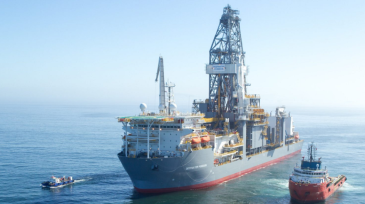
New proximity-based safety process watches the drill floor on board the drillship Deepwater Conqueror.
-
Utah FORGE has completed the first highly deviated, deep geothermal well to target depth and at planned trajectory, 60 days ahead of schedule.
-
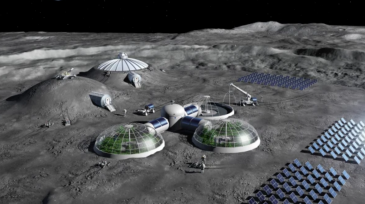
When humankind returns to the Moon to establish colonies it will be bringing with it technologies born in the oil and mining industries. The European Space Agency and Russia’s Roscosmos will be central to that effort as they prepare to land a robotic drilling system to extract oxygen and water from frozen lunar soil.
-
The authors describe challenges that must be overcome to reach the goal of drilling systems automation.