Drilling

The deal expands TotalEnergies' exposure to US deepwater exploration acreage in the Green Canyon and Walker Ridge areas.

Industry forecasts point to increasing upstream expenditure and production, even as geopolitical volatility and smaller discoveries challenge project economics.
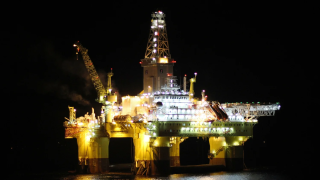
Industry fundamentals continue to strengthen as rising utilization and scarce replacement capacity support higher rig valuations.
-
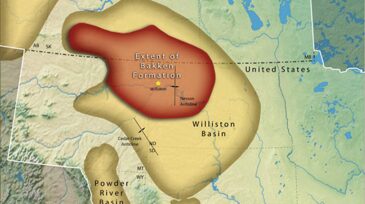
 Multistage horizontal well designs were first implemented in the Bakken in 2007. Since then, more than 12,000 wells have been completed in either the Middle Bakken or Three Forks zones.
-
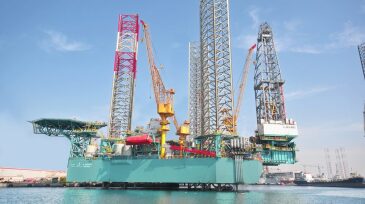
ADNOC’s drilling subsidiary has increased its rig fleet to 95 and plans to add “dozens” more by 2025.
-
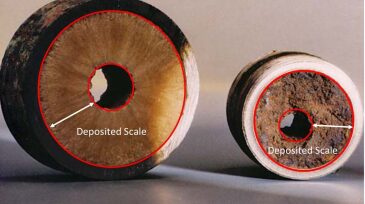
Scaling buildup inside wellbores is a serious production problem that dramatically reduces the well productivity index. This issue has a significant cost across the industry, mostly associated with loss of production or additional operations such as well intervention.
-
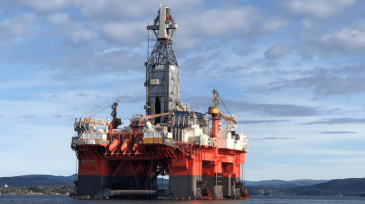
By using the four converter-battery systems, the operator estimates it will be able to reduce the runtime of the rig’s on-platform diesel engines by 42%, cutting CO2 emissions by 15% and NOx emissions by 12%.
-
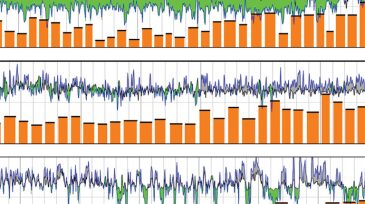
Optimizing horizontal well placement is not limited to identifying the most-favorable reservoir, but also involves identifying the ideal target window within that reservoir.
-
Drilling has become a complex operation that requires a multitude of tasks to be managed at the same time. Not surprisingly, then, drilling automation will gain momentum in the near future to deliver consistent execution and performance safely and with good wellbore quality.
-
This paper covers the 7-year history of drilling-fluids application in a reservoir drilling campaign offshore Abu Dhabi, from the early use of a solids-free, brine-/water-based mud to the recent application of nondamaging, nonaqueous fluids (NAFs) with micronized acid-soluble ilmenite.
-
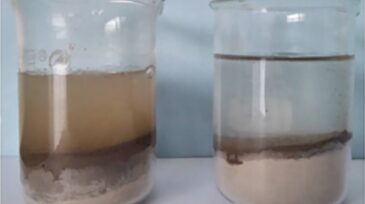
This study focus on the design and evaluation of a customized water-based mud (NP-WBM) using silica oxide nanoparticles (SiO2-NPs) and graphene oxide nanoplatelets (GNPs).
-
Recent research has put extensive focus on the magic of graphene in drilling fluids. Graphene, because of its thermal, electrical, chemical, and mechanical properties, improves mudcake stability and minimizes fluid loss that eventually reduces formation damage.