Drilling

This paper presents the application of degradable particulate-diverter technology to improve oil production by effectively diverting stimulation treatment fluids away from high-water-cut, high-permeability, high-temperature producing intervals or zones.

This paper presents the methodology for developing drill-in organophilic clay-free invert-emulsion-fluid technology that enhances well production through fundamental geological studies and fluid testing.

This paper presents the large-scale deployment and operational integration of an advanced, automated rheometer in the Ghawar gas field, one of the world’s most prolific and technically complex hydrocarbon developments.
-
 Multilateral wells with smart completions controlled by different flow-control technologies offer great operational flexibility, with each lateral able to be operated and optimized independently.
-
This paper demonstrates how the latest generation of connections has been tested and validated to extreme loads before being installed in the wellbore.
-
A North Sea field development included installation of long 4½-in. completion liners in the horizontal reservoir sections of each well. To minimize overall risk, the operator planned to use managed-pressure drilling (MPD).
-
A field well was designed, built, and used to demonstrate the concept of real-time monitoring of the flow of drilling mud and smart cement and the hardening of the cement in place.
-
This paper discusses an expandable-liner-hanger (ELH) system that provides liner rotation during the liner deployment and the cementing operation while providing a hydraulically energized liner-top seal upon setting.
-
Despite cement’s remarkable properties, the search continues for enhancements in the areas of cost and isolation performance. Efficiencies and enhancements have been explored even to the point of replacing cement with other materials.
-
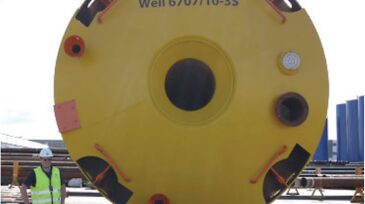
The conductor anchor node (CAN) technology was introduced as part of the architecture for Centrica’s Ivory deepwater exploration well in the Norwegian Sea to optimize efficient operations for the well’s riserless section.
-
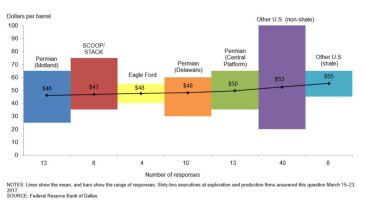
Aggressive drilling growth in the Permian and other shale plays belies the cost of those wells, which in many cases are in the red.
-
Deepwater operators continually face technical and environmental challenges to drilling and completing wells safely and efficiently.
-
This paper focuses on the application of radio-frequency-identification technology to enable an operator to eliminate an intervention run (or intermediate liner) for a 10,000-ft reservoir section.