Drilling

This paper presents the application of degradable particulate-diverter technology to improve oil production by effectively diverting stimulation treatment fluids away from high-water-cut, high-permeability, high-temperature producing intervals or zones.

This case study from ARC Resources and DarkVision outlines the use of acoustic imaging tools in two active fracturing programs in Canada to monitor well casing deformation.

This case study from Tomax outlines the use of artificial intelligence to analyze high-fidelity data of the full drilling process.
-
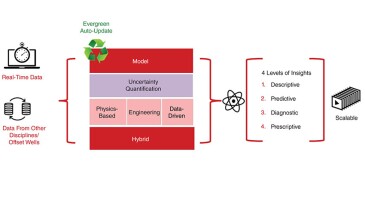
 This paper presents a novel methodology that merges principles of physics, data science, and uncertainty modeling to offer more-resilient and -precise solutions for managing real-time pipe-sticking occurrences
-
The service giant shares how its new technology can sense rock properties 50 ft ahead of the bit in horizontal wells.
-
The agreement focuses on improving operational efficiency and consistency through advanced digital tools and real-time data integration.
-
An innovative approach uses a random-forest-based framework to link logging-while-drilling and multifrequencey seismic data to enable dynamic updates to lithology parameter predictions, enhancing efficiency and robustness of geosteering applications.
-
Oil and gas companies drilled 75 “high-impact” wells in 2024, representing 5.2 billion BOE.
-
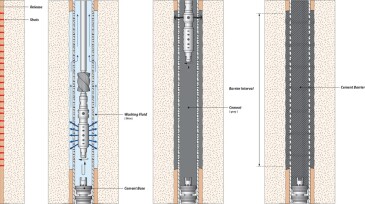
This paper presents a comprehensive literature review of perforate, wash, and cement techniques that compares new methods with traditional ones and uses field cases and computational fluid dynamics to find the most cost- and time-effective practices without sacrificing safety.
-
The authors of this paper describe a method of stimulating a multizone hydrocarbon-producing well wherein a tool is deployed downhole by wireline to generate acid vapor at a target depth, allowing each interval to be treated uniquely.
-
The company’s new Retina imaging system creates high-resolution borehole images at the drill bit.
-
SponsoredAltitude Energy Partners optimized drilling efficiency by minimizing dysfunctions and protecting downhole components. Their directional drilling team ensured consistent curves and laterals through precise BHA design, modeling, and trajectory control—reducing nonproductive time and drilling costs, and achieving a 100% improvement in efficiency by pad completion.
-
Operator targets first oil 30 months after field sanction of $1.5 billion heavy-oil project that will use a refurbished wellhead platform and FPSO.