Drilling

This edition highlights three offshore technology papers that address a common industry theme: how targeted engineering solutions can reduce uncertainty, shorten operations, and make technically constrained offshore well activities more executable.

This paper aims to establish a set of best practices for generating particle-size-distribution data from core samples.

This paper discusses the successful execution of two openhole gravel-pack completions in two Gulf of Mexico fields with depleted reservoirs.
-
 Challenging environments such as unstable clay formations represent high operational risk when running tubulars after drilling is completed.
 -
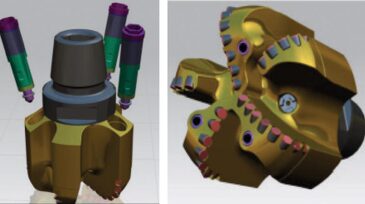
Baker Hughes is developing a drill bit capable of auto-adjusting its depth-of-cut feature to handle dynamic drilling conditions.
-
Larger-diameter coiled tubing recently has been used to perform millouts because of its improved set-down force and increased annular velocities for cleanout purposes. Service companies and operators have reduced the number of wiper trips when using larger-diameter CT, to save time and money.
-
This paper describes experiences, challenges, and approaches to solving the problems related to creating an advanced early kick-detection system suitable for floating mobile offshore drilling units.
-
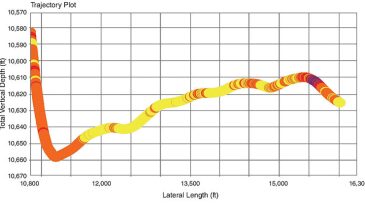
The force required to drill through a rock is a direct test of its strength and stiffness. Developing a reliable measure of the properties of rock based on the force required to drill a long lateral is a large challenge.
-
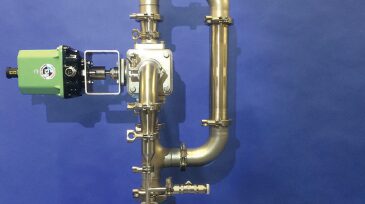
Automated particle-size analyzers are something you will not see on most drilling rigs, but some think this outside-the-oil-field technology will play a big role in the future of the drilling sector.
-
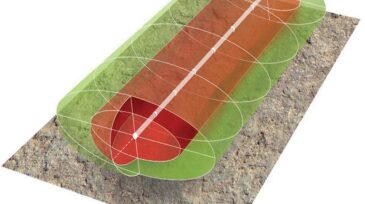
Wellbore position is computed from survey measurements taken by a measurement-while-drilling (MWD) tool in the bottomhole assembly (BHA).
-
Cementing is central to the discussion of zonal isolation and well integrity.
-
Saudi Aramco operates a large offshore oilfield development that has driven achievements in multilateral and extended-reach directional wells.
-
Eight of the world’s 10 longest wells have been drilled by ExxonMobil as operator of the Sakhalin-1 project in Russia.