Drilling

Research by Enervus sees early 2026 permitting activity for the carbon capture and storage wells pointing to a growing approval queue, even while the rate of applications eases.

The new guidelines were released prior to reports that enhanced geothermal developer Fervo Energy experienced a blowout in Utah with no reported injuries.
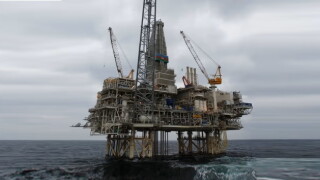
BP said it expects to keep the Azeri-Chirag-Gunashli (ACG) project in production into the 2040s by tapping into separate nonassociated gas reservoirs.
-
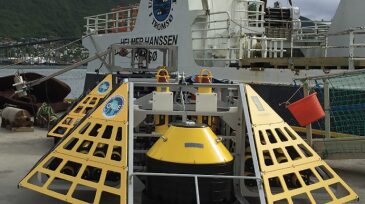
 Anyone selling something new for offshore exploration and production has to be able to answer a simple question from customers, “How can we save some money?” For Norwegian oil companies, change is coming in many forms: steel, sensors, software, and standards.
 -
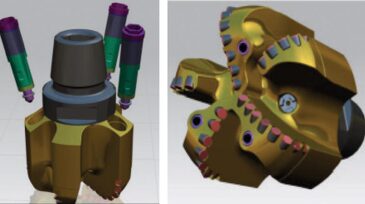
Baker Hughes is developing a drill bit capable of auto-adjusting its depth-of-cut feature to handle dynamic drilling conditions.
-
Challenging environments such as unstable clay formations represent high operational risk when running tubulars after drilling is completed.
-
A real-time method is presented to predict impending stuck pipe with sufficient warning to prevent it. The new method uses automated analysis of real-time modeling coupled with real-time-data analysis.
-
Wellbore position is computed from survey measurements taken by a measurement-while-drilling (MWD) tool in the bottomhole assembly (BHA).
-
Cementing is central to the discussion of zonal isolation and well integrity.
-
Saudi Aramco operates a large offshore oilfield development that has driven achievements in multilateral and extended-reach directional wells.
-
Eight of the world’s 10 longest wells have been drilled by ExxonMobil as operator of the Sakhalin-1 project in Russia.
-
This work demonstrates cement design that includes evaluating cement-sheath mechanical integrity in intercalated salts.
-
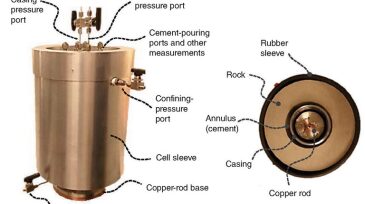
Operators in the North Sea have been concerned about the ability of the cement sheath to maintain sealing integrity because of the increasing number of reported failures in mature wells. This paper presents results from a new laboratory setup to visualize the source of issues.