Drilling

Research by Enervus sees early 2026 permitting activity for the carbon capture and storage wells pointing to a growing approval queue, even while the rate of applications eases.

The new guidelines were released prior to reports that enhanced geothermal developer Fervo Energy experienced a blowout in Utah with no reported injuries.
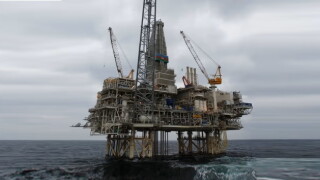
BP said it expects to keep the Azeri-Chirag-Gunashli (ACG) project in production into the 2040s by tapping into separate nonassociated gas reservoirs.
-
 As the drilling industry improves its efforts to capture drilling operation activities in real time, it has generated a significant amount of data that drilling engineers cannot process on their own.
 -
This paper shows how automation reduces invisible lost time and allows drillers to focus on other activities while repetitive tasks are controlled by software.
-
To accelerate learning, an operator deployed a real-time, closed-loop downhole automation system (DHAS) in conjunction with wired drillpipe in the 8¾-in.-hole section.
-
This paper presents the LCDSS and elaborates on the use of it in the preparation and training phase and the operational phase, including forecasting.
-
In the Eagle Ford, an integrated approach to engineering and operations was key to optimize performance and improve understanding of the area.
-
Wireline continuous coring (WCC) has been adapted from the mining industry for unconventional resources. This paper is aimed at identifying and addressing complications experienced in the use of WCC.
-
This paper analyzes differing well-factory approaches to unconventional assets, with examples from the Wolfcamp unconventional oil play in the Permian Basin.
-
A number of companies are pushing for alternative approaches to offshore development that seek to access marginal reservoirs. Their differing and unique ideas call for a departure from the usual playbook, but share a common goal of slashing capital costs.
-
Precise casing-wear prediction is important for improving well integrity and longevity, while simultaneously making casing designs more cost-effective. There are no industry guidelines for casing-wear prediction. This article presents a validated predictive model.
-
Challenging environments such as unstable clay formations represent high operational risk when running tubulars after drilling is completed.