Drilling

Research by Enervus sees early 2026 permitting activity for the carbon capture and storage wells pointing to a growing approval queue, even while the rate of applications eases.

The new guidelines were released prior to reports that enhanced geothermal developer Fervo Energy experienced a blowout in Utah with no reported injuries.
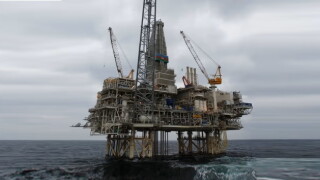
BP said it expects to keep the Azeri-Chirag-Gunashli (ACG) project in production into the 2040s by tapping into separate nonassociated gas reservoirs.
-
 Understanding drilling dynamics, the downhole shock and vibration that occur while drilling, is a crucial step to improving drilling efficiency and reducing nonproductive time (NPT).
 -
In organic shales, hydraulic fracturing is important for optimizing the production of horizontal wells. For a standalone lateral, the propped surface should be maximized to increase production. In the case of a pad, well spacing is an additional factor.
-
With limited resources and lots of dedication, West Virginia University students wowed judges of the ATCE Drillbotics drilling automation challenge with the automated drilling device they built.
-
This paper offers an alternative explanation for the early boundary-dominated flow related to dissolution of salt-sealed natural fractures in the shale.
-
A Drilling Advisory System (DAS) is a rig-based drilling-surveillance and -optimization platform that encourages regular drilloff tests, carefully monitors drilling performance, and provides recommendations for controllable drilling parameters to help improve the overall drilling process.
-
An analysis studied whether a well's toe could be affecting the production performance.
-
How do mooring systems reduce risks of hurricane damage to mobile offshore drilling units?
-
As systems automation becomes more widespread in drilling, simulators are required to plan, train rig crews, and monitor real-time operations.
-
Although early inflow control devices and intelligent completions (ICs) were introduced almost 20 years ago, completion technology has not kept pace with advancements in drilling technology.
-
A long-time energy industry executive and chemical engineer has built a new water treatment system that he says can increase recovery rates from shale wells without using chemicals and will recycle all the water used in the process.