Emission management

This paper presents a flexible, highly cost- and energy-efficient method of gas separation and CO₂ capture from many different gas mixtures with a large range of CO₂ concentrations.

Emissions management covers a wide array of topics such as carbon capture, use, and storage; emissions monitoring; flare management; methods to improve operational efficiency; carbon accounting; and the effect of emissions management on global and local economics. The papers published in the past year span all these subcategories.

This study explores the carbon-capture and mineralization potential of ultramafic rock powders when exposed to flue gases generated from combustion of crude oil and mesquite-derived charcoal.
-
 SPE has established three new technical sections—the Management Technical Section, the Methane Emissions Management Technical Section, and the Data Science & Engineering Analytics Technical Section.
 -
The new-generation FPSO will minimize emissions with carbon capture and reinjection as well as energy-recovery capabilities.
-
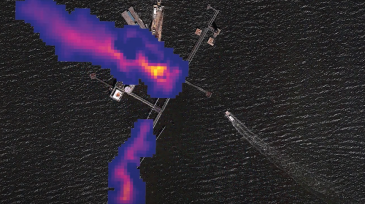
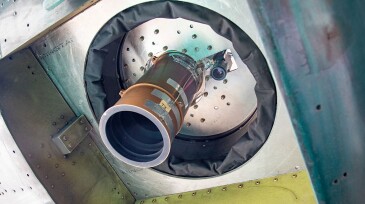
Airborne emissions surveys of offshore oil and gas facilities are not as common as those done onshore. A recent study suggests that needs to change.
-
The assumption of lower emissions from natural gas only holds true when the methane leaks and flaring are addressed. Mitigation of methane emissions offers an opportunity for the oil and gas industry to drastically reduce overall emissions that are typically reported on a CO2-equivalent basis. Some producers opt to showcase their good performance via voluntary certifi…
-
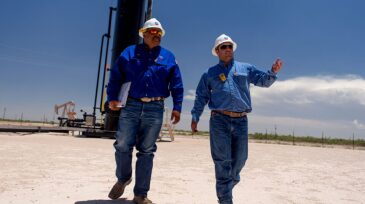
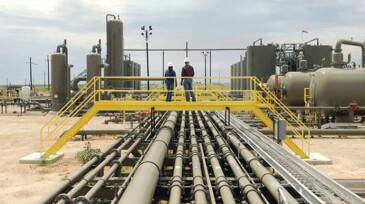
Chevron assets in Texas and Colorado have earned high marks for control of methane emissions under a pilot program with Project Canary, paving the way for its sale of responsibly sourced gas.
-
An emissions-reduction study conducted for a Middle East operator identified potential annual savings of $10 million–$15 million, a 20% decrease in total Scope 1 CO2eq emissions, and 10 MW of energy reduction and delivered more than 100 recommendations for both technical and internal framework improvements.
-
The suite of tools includes a digital platform for sharing emissions data, an agreed set of definitions that nails down what different terms mean, a single set of metadata definitions, and an API through which users can access data. When used together, these tools provide an integrated perspective on what emissions are coming from where.
-
A trio of new satellites that use infrared sensor technology are now flying around the Earth at a speed faster than 4 miles per second.
-
ExxonMobil has won an independent certification level for managing methane emissions in its New Mexico shale operations and is the first company to meet the standard for associated gas.
-
Seven years, and we’re on track to exceed the 1.5°C target established by the Paris Agreement in 2015 to limit global warming by 2030. Instead, we may be turning up the heat to 3.0°C. And in this case, doubling the wager does not hold potential for greater rewards. A recent report addressed the costs of technologies for emissions mitigation and their likelihood of mak…