Energy transition

DNV notes that energy and industrial process-related carbon emissions will have dropped by 2050 by only 44% from today’s level, not even halfway to the net-zero pledge envisioned by the Paris climate agreement.

This study investigates the potential for in-situ hydrogen generation from hydrocarbons using in-situ combustion, with particular emphasis on the role of kerogen content and heating mode.

The new publication, created with the support of and in partnership with Project InnerSpace, looks at all aspects of the burgeoning geothermal industry.
-
 The first phase of the Norwegian project is expected to receive its first carbon dioxide this year, with the second phase slated to start operations in late 2028.
-
Industry leaders say they believe oil and gas will continue to play a pivotal role in the energy mix in the lengthening energy transition timeline.
-
Experts speaking at CERAWeek 2025 lauded industry's shift from focusing on the energy transition to prioritizing oil production.
-
A new publication from Ipieca and the International Association of Oil and Gas Producers presents a health-focused roadmap for navigating the energy transition.
-
The supermajor is making a major course correction as it plans to slash renewable investment and focus more on oil and gas development.
-
This article kicks off a Q&A series from the SPE Research and Development Technical Section, focusing on emerging energy technologies. In this piece, Amy Bason of the Oil and Gas Climate Initiative highlights decarbonization efforts in global transportation.
-
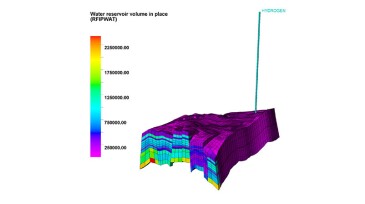
This paper aims to investigate the use of an optimization workflow to maximize both hydrogen storage and the net present value to obtain an optimal reservoir development strategy.
-
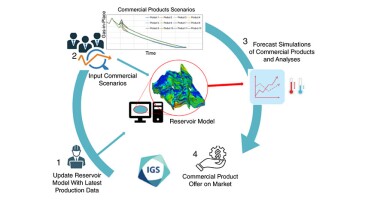
This paper describes how ramp-up operations and commercialization of an underground storage asset were combined, rapidly providing a wide range of commercial services to the Italian gas system while long-term UGS performance increased continuously.
-
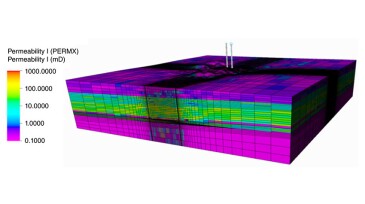
The authors introduce a novel framework combining dynamic mode decomposition, a data-driven model-reduction technique, with direct data assimilation to streamline the calibration of carbon-dioxide plume evolution models.
-
Transitioning to a low-carbon economy demands large-scale CO2, natural gas, and hydrogen storage. In this context, the application of AI/ML technology to uncover geochemical, microbial, geomechanical, and hydraulic mechanisms related to storage and solve complicated history-matching and optimization problems, thereby enhancing storage efficiency, has been prominently …