Enhanced recovery

Coreflood experiments reveal that alkali significantly reduces viscosity loss in polyacrylamide flooding systems by minimizing adsorption and improving polymer stability under shear stress. The findings position viscosity retention as a key screening criterion for successful alkali-polymer enhanced-oil-recovery applications.

This study investigates the potential for in-situ hydrogen generation from hydrocarbons using in-situ combustion, with particular emphasis on the role of kerogen content and heating mode.

This paper presents the application of degradable particulate-diverter technology to improve oil production by effectively diverting stimulation treatment fluids away from high-water-cut, high-permeability, high-temperature producing intervals or zones.
-
 This paper details a successful pilot to improve long-term well performance using acid stimulation aided by a tailored metal oxide nanoparticle-based fluid in the Wolfcamp A formation.
-
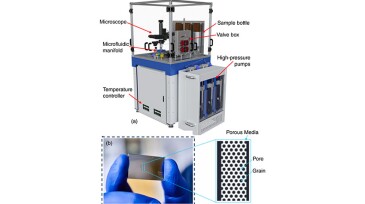
The authors present an efficient microfluidic platform to measure high-quality minimum miscibility pressure data of CO2 with various impurities faster and easier.
-
This study introduces a detailed model to capture the physics and chemistry of acid flow in complex horizontal wells completed in carbonate formations.
-
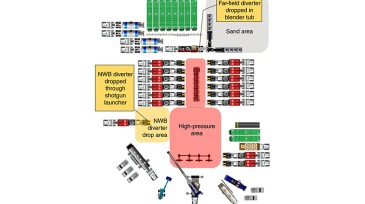
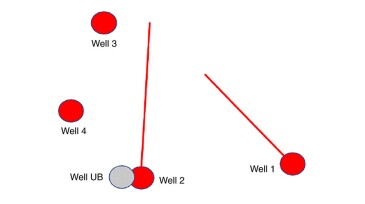
The authors of this paper describe a project in which far-field diverters were pumped to mitigate wellbore sanding and production loss in existing parent wells.
-
This paper describes the application of an underbalanced coiled tubing technology in tight sandstones, using an integrative approach that incorporates petrophysical, geophysical, and reservoir engineering data.
-
In this paper, the authors propose polymer-assisted water-alternating-gas (WAG) injection as an alternative method to reduce gas mobility while reducing the mobility of the aqueous phase and, consequently, improving WAG performance.
-
The authors of this paper study the effect of solids particles on oil/water separators and on produced-water treatment.
-
The EOR scene has evolved as well. Low-salinity waterflooding, originally thought to apply only in certain sandstone reservoirs, appears to be able to unlock additional reserves also for some carbonate formations, although the fundamental mechanisms are different.
-
Engineers desperately need an alternative to acid placement through pipe, coiled tubing, or bullheading. For example, propellants have been around for years; however, their performance has not quite met the hype. Nevertheless, several case histories have been authored to suggest their efficacy; historically, some treatments have even been wildly successful.
-
This paper presents the design and development of a prototype intelligent water-injection and smart allocation tool aimed at achieving autonomous waterflood operations.