Enhanced recovery

This case study presents a procedure in which the operator compared production from wells with adjusted wettability to a control group, finding that the adjustments resulted in significant improvements in production and reductions in produced water.
This study aims to systematically assess casing integrity and corrosion risks associated with CO2 injection in oil-recovery operations.

This paper presents findings reinforcing the argument that acid fracturing is a strong alternative stimulation method to improve productivity in the Austin Chalk formation.
-
 Researchers from Chevron are looking into a new approach to understand the drivers of polymer hydration. How might this affect the design of mixing systems in the field, and could it affect offshore EOR applications?
 -
The paper discusses the main factors affecting CO2 corrosion, provides an assessment of what to look for in major equipment, and details recommended material of construction and corrosion mitigation/control methods.
-
A pilot project demonstrates that facilities design plays an important role in providing sources of CO2 for the gas-handling process for injection into a carbonate formation as a tertiary recovery mechanism.
-
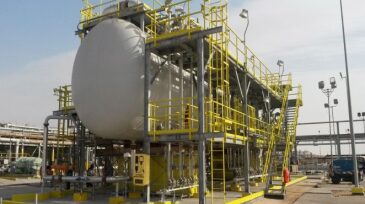
A demonstration project of carbon capture, utilization, and storage through enhanced oil recovery was conducted in Saudi Arabia. Surface facilities for such projects are expensive to build and involve tradeoffs in options based on economics for a given set of conditions.
-
Seismic stimulation, achievable with the implementation of a single tool, requires significantly lower investments than gas, thermal, and chemical injection methods, with minimal environmental impact.
-
The report card for unconventional oil and gas producers from a leading industry analyst is A+ for growth and F- for paying back investors.
-
SponsoredBy adopting enhanced oil recovery (EOR) techniques, the amount of oil that could be recovered could be increased by as much as 30% to 70%. Low Salinity Water Flooding (LSWF) is flexible and has a low cost, with a readily accessible feedstock – seawater.
-
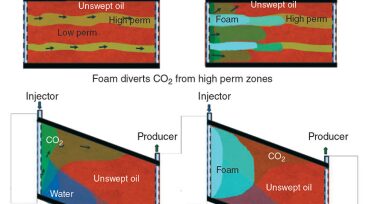
Aqueous foam has been demonstrated to have promise in conformance-control applications. This paper explores the foaming behavior of a CO2-soluble, cationic, amine-based surfactant.
-
A carbon-dioxide (CO2) -foam enhanced-oil-recovery (EOR) pilot research program has been initiated to advance the technology of CO2 foam for mobility control in a heterogeneous carbonate reservoir.
-
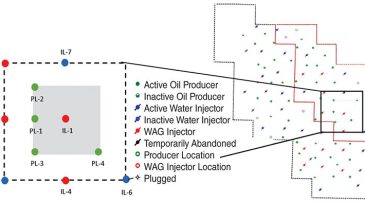
This paper presents an analysis of a CO2-foam-injection pilot in the Salt Creek Field, Natrona County, Wyoming.