Enhanced recovery

This paper presents a study that confirms glass-reinforced-epoxy-lined tubing as a reliable, cost-effective solution for long-term water-injection service in moderate-salinity offshore environments.

This paper presents a novel reservoir engineering/reservoir simulation approach—a data-driven interwell-connectivity model augmented as a digital twin—to predict reservoir dynamics and optimize operations in the Changqing oil field of China.
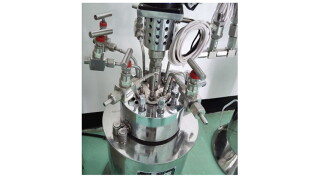
This study aims to systematically assess casing integrity and corrosion risks associated with CO2 injection in oil-recovery operations.
-
 Since 2006, production from gas injection has outstripped that from thermal, and is continuing to grow. Even though industry conditions remain tough, EOR is expected to be increasingly important in the future, with the possibility of further uptake of it linked to the climate-change agenda.
 -
The low recovery rates observed in most shale reservoirs has prompted a number of research projects to develop new enhanced oil recovery methods.
-
This paper describes a gas-injection pilot that has been implemented in offshore Middle East carbonate reservoirs to assess injectivity, productivity, macroscopic-sweep efficiency, flow assurance, and operational efficiency in a field that has a long water-injection history.
-
The operator has initiated a cyclic-steam-stimulation project in the Opal A diatomite of the Sisquoc formation on the Careaga lease in the Orcutt oil field in Santa Barbara County, California. This paper discusses steam-injection step-rate tests (SRTs) for this asset as part of its expansion.
-
The polymer-injection project in the Dalia field, one of the main fields of Block 17 in deepwater Angola, represents a world first for both surface and subsurface aspects.
-
The Loma Alta Sur (LAS) field is a multilayer fluvial sandstone reservoir in the Neuquén basin of Argentina. Colloidal-dispersion-gel injection was considered a viable strategy to improve oil recovery in the field after early water breakthrough.
-
With the recent drop in oil prices, operators are shifting to optimization of existing assets with minimal costs. For mature floods (water, chemical, and CO2), one low-cost optimization strategy is the intelligent adjustment of well-rate targets.
-
Thermal steam stimulation is considered the most effective of current methods for heavy-oil production. However, the method has problems with low coverage by steam injection and decreased efficiency.
-
The addition of a hydrocarbon condensate to steam operations in heavy-oil and bitumen reservoirs has emerged as a potential technology to improve not only oil recovery but also energy efficiency.
-
Chemical enhanced-oil-recovery methods such as polymer and alkaline/surfactant/polymer (ASP) flooding are generally not considered suitable for oil viscosities greater than 100 or 200 cp.