Enhanced recovery

This paper presents a study that confirms glass-reinforced-epoxy-lined tubing as a reliable, cost-effective solution for long-term water-injection service in moderate-salinity offshore environments.

This paper presents a novel reservoir engineering/reservoir simulation approach—a data-driven interwell-connectivity model augmented as a digital twin—to predict reservoir dynamics and optimize operations in the Changqing oil field of China.
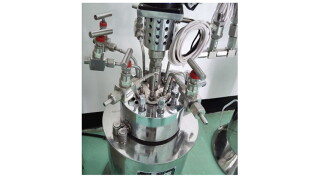
This study aims to systematically assess casing integrity and corrosion risks associated with CO2 injection in oil-recovery operations.
-
 This article describes how the use of a biological EOR technique that applied produced water for reservoir flooding in a mature field led to rapid and substantial increases in oil production.
 -
The authors present a method to reduce uncertainty in EOR performance adaptively while identifying an optimal operational strategy for a given tolerance to risk.
-
Conventional miscible- or near-miscible-gasflood simulation often overestimates oil recovery, mostly because it does not capture a series of physical effects tending to limit interphase compositional exchanges.
-
The Bakken’s ultratight, largely oil-wet nature limits the potential of waterflooding. As an alternative, an optimally spaced well-to-well surfactant-flooding technology is proposed.
-
Limited design capability, few number of field tests, and lack of monitoring and control were the reasons most EOR projects did not perform in the past. All those are history now.
-
This study provides technical analysis of the viability of enhanced-oil-recovery (EOR) processes; the results indicate the potential for significant improvement in recovery efficiency over continued waterflooding.
-
Identifying the appropriate fuel for thermal EOR projects in large Persian Gulf fields requires analysis of a variety of options, including solar, for power generation.
-
An 18-well numerical-simulation model was built to represent an operator’s Lower Shaunavon waterflood-pilot area. Numerical simulation was used, and a history match on the pilot area was performed.
-
To optimize the development plan of a giant carbonate reservoir offshore Abu Dhabi to extend the production plateau and improve recovery, detailed sector models were used to facilitate the large number of required simulation runs.
-
Oil quality and drilling-pad constraints for a viscous-oil field defined a development scheme that consisted of a waterflood line drive with horizontal producers and water-injection (WINJ) wells side by side.