Enhanced recovery

SPE Journal is seeking submissions for a special issue on sustainable enhanced oil recovery (EOR), highlighting innovations that boost oil recovery while reducing CO2 emissions and environmental impact. The Call for Papers opens on 15 October 2026.

By integrating experimental and mathematical modeling approaches, this work aims to advance the understanding of sand-detachment dynamics and formation instability under varying saturation conditions.

As Egypt’s largest oil and gas investor, Eni is ramping up its 2026–2027 drilling campaign with new investments cross the Mediterranean offshore, Nile Delta, Western Desert, and offshore Sinai to strengthen the country’s role as a regional gas and LNG export hub.
-
 This paper details a successful pilot to improve long-term well performance using acid stimulation aided by a tailored metal oxide nanoparticle-based fluid in the Wolfcamp A formation.
 -
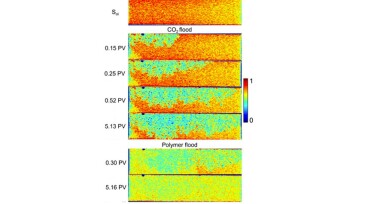
In this paper, the authors propose polymer-assisted water-alternating-gas (WAG) injection as an alternative method to reduce gas mobility while reducing the mobility of the aqueous phase and, consequently, improving WAG performance.
-
The authors of this paper study the effect of solids particles on oil/water separators and on produced-water treatment.
-
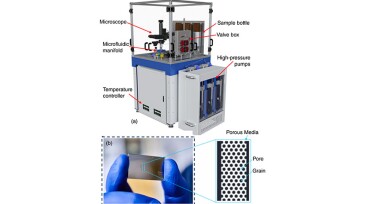
The authors present an efficient microfluidic platform to measure high-quality minimum miscibility pressure data of CO2 with various impurities faster and easier.
-
This study introduces a detailed model to capture the physics and chemistry of acid flow in complex horizontal wells completed in carbonate formations.
-
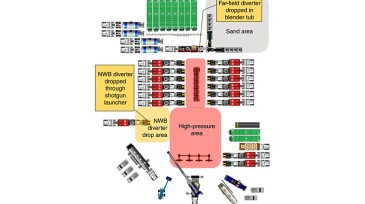
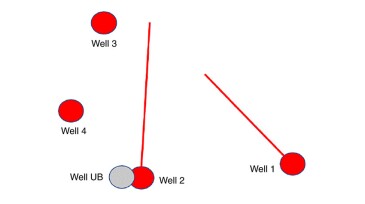
The authors of this paper describe a project in which far-field diverters were pumped to mitigate wellbore sanding and production loss in existing parent wells.
-
Engineers desperately need an alternative to acid placement through pipe, coiled tubing, or bullheading. For example, propellants have been around for years; however, their performance has not quite met the hype. Nevertheless, several case histories have been authored to suggest their efficacy; historically, some treatments have even been wildly successful.
-
This paper describes the application of an underbalanced coiled tubing technology in tight sandstones, using an integrative approach that incorporates petrophysical, geophysical, and reservoir engineering data.
-
The EOR scene has evolved as well. Low-salinity waterflooding, originally thought to apply only in certain sandstone reservoirs, appears to be able to unlock additional reserves also for some carbonate formations, although the fundamental mechanisms are different.
-
Traditional oil extraction methods hit a snag in noncontiguous fields, where conventional flow-based EOR techniques falter. In southwest Texas, a producer faced imminent shutdown of its canyon sand field due to rapid production decline. Field tests using elastic-wave EOR determined whether the field could be revitalized or if a costly shut-in process was inevitable.