Enhanced recovery

SPE Journal is seeking submissions for a special issue on sustainable enhanced oil recovery (EOR), highlighting innovations that boost oil recovery while reducing CO2 emissions and environmental impact. The Call for Papers opens on 15 October 2026.

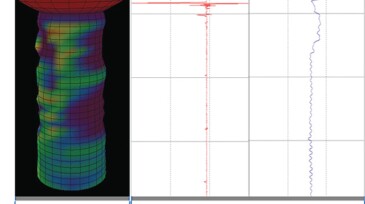
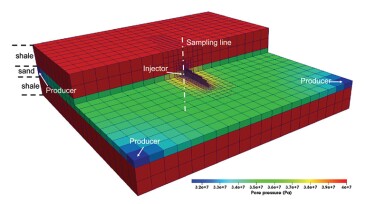
By integrating experimental and mathematical modeling approaches, this work aims to advance the understanding of sand-detachment dynamics and formation instability under varying saturation conditions.

As Egypt’s largest oil and gas investor, Eni is ramping up its 2026–2027 drilling campaign with new investments cross the Mediterranean offshore, Nile Delta, Western Desert, and offshore Sinai to strengthen the country’s role as a regional gas and LNG export hub.
-
 This paper illustrates a novel methodology that enabled the safe application of coiled tubing abrasive perforation to increase production in a sour horizontal extended-reach oil producer.
 -
This paper presents a new real-time method to estimate stage-to-stage interference and well-to-well interference and their implications on completions efficiency.
-
As the announcement of carbon sequestration projects becomes the norm, it’s time we look at what we know from a technical angle about how these projects need to be run based on the industry’s experience with enhanced oil recovery.
-
This paper summarizes the integrated technical learnings from the successful application of the installation of autonomous outflow control technology in a new long horizontal injector well.
-
This paper describes how a better understanding of the connection between the well and the reservoir through use of fiber-optic sensors can improve reservoir simulation models, decision-making, and well-performance evaluation.
-
In this study, the application of electrical resistance heating on multilateral wells is studied to illustrate the enhanced physical and economic benefits of the method.
-
This paper introduces methods to fully couple reservoir simulation with wellbore flow models in fractured injection wells.
-
The paper presents a model for shale gas production in which CO2 is injected by huff ’n’ puff into a hydraulic fracture surrounded by a shale matrix.
-
Statistics are important in knowing where the sharp minds of SPE members are investing their energies. Typically, this is also in proportion to what those members need. Hence, it is noteworthy that more than a fifth of the papers were about CO2-based EOR, indicating not only renewed interest but also the motivation for carbon capture, use, and storage.
-
This study explores pitfalls experienced when using capacitance/resistance modeling as a plug-and-play technique for waterflood optimization and discusses workarounds and mitigations to improve its reliability.