Enhanced recovery

SPE Journal is seeking submissions for a special issue on sustainable enhanced oil recovery (EOR), highlighting innovations that boost oil recovery while reducing CO2 emissions and environmental impact. The Call for Papers opens on 15 October 2026.

By integrating experimental and mathematical modeling approaches, this work aims to advance the understanding of sand-detachment dynamics and formation instability under varying saturation conditions.

As Egypt’s largest oil and gas investor, Eni is ramping up its 2026–2027 drilling campaign with new investments cross the Mediterranean offshore, Nile Delta, Western Desert, and offshore Sinai to strengthen the country’s role as a regional gas and LNG export hub.
-
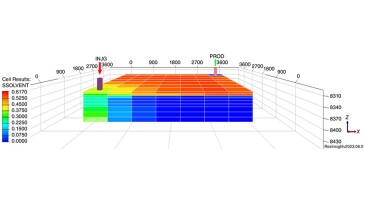
 CO₂ enhanced oil recovery (EOR) provides an attractive and commercially established technique to store CO₂ underground. EOR modeling is crucial because complex simulation is required to predict the behavior of CO₂ and its interaction with the oil and reservoir rock.
 -
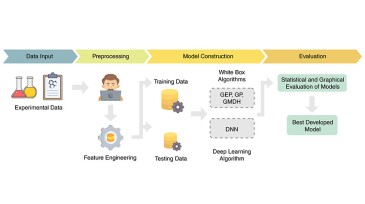
The objective of this study is to develop an explainable data-driven method using five different methods to create a model using a multidimensional data set with more than 700 rows of data for predicting minimum miscibility pressure.
-
The authors present an open-source framework for the development and evaluation of machine-learning-assisted data-driven models of CO₂ enhanced oil recovery processes to predict oil production and CO₂ retention.
-
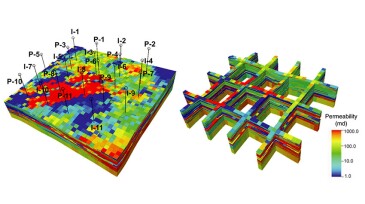
The authors of this paper propose hybrid models, combining machine learning and a physics-based approach, for rapid production forecasting and reservoir-connectivity characterization using routine injection or production and pressure data.
-
This polymer retention study examines temperature effect on an ATBS-based polymer, using single- and two-phase retention studies and different analytical methods in the presence and absence of oil.
-
The partnership between GLJ and Energy Fuse Group aims to leverage the expertise of both companies in project management, operational design, and subsurface and commercial evaluations to facilitate effective CO2 storage solutions.
-
The SPE IOR-EOR Terminology Review Committee has released its recommendations for the use of IOR, EOR, and newly introduced term, assisted oil recovery (AOR).
-
This paper describes a project in the heavy oil Captain field in the UK sector of the North Sea in which reduced environmental impact dovetails with improved economics.
-
International agreements and national policies on environmental sustainability are changing the outlook for enhanced oil recovery globally. These changes are highlighted by both monetary and intellectual commitments by oil companies around the world.
-
This paper describes a polymer-injection pilot in the Chichimene heavy oil field in Colombia.