Enhanced recovery

SPE Journal is seeking submissions for a special issue on sustainable enhanced oil recovery (EOR), highlighting innovations that boost oil recovery while reducing CO2 emissions and environmental impact. The Call for Papers opens on 15 October 2026.

By integrating experimental and mathematical modeling approaches, this work aims to advance the understanding of sand-detachment dynamics and formation instability under varying saturation conditions.

As Egypt’s largest oil and gas investor, Eni is ramping up its 2026–2027 drilling campaign with new investments cross the Mediterranean offshore, Nile Delta, Western Desert, and offshore Sinai to strengthen the country’s role as a regional gas and LNG export hub.
-
 This study provides the first experimental evidence that in-situ combustion is feasible in Permian shale under realistic rock–fluid conditions.
 -
The works highlighted in this year’s Acidizing feature demonstrate novel, diverse innovations in sustainability, enhanced productivity, and logistical efficiency by authors of SPE conference papers.
-
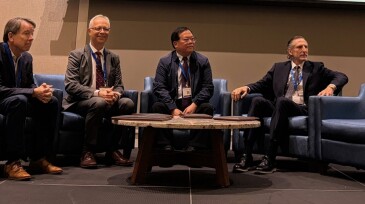
Three experts were recognized with the Pioneer Award at the 2026 SPE Improved Oil Recovery Conference in Tulsa for their technological contributions to improved oil recovery.
-
Acting director of the new center Ale Hakala outlines the research priorities guiding the newly established center’s focus on production enhancement technologies.
-
The authors write that deployment of artificial-intelligence-based high-gas/oil ratio well-control technology enabled stabilization of well performance and maintenance of optimal production conditions.
-
Technology and partnerships remain important, while phased approaches may supplant lengthy appraisal programs, experts said during CERAWeek.
-
This paper introduces a novel steam-sensitive flow-control device designed to restrict the production of steam and low-subcool liquids while allowing higher mobility of oil-phase fluids.
-
This study integrates laboratory testing with reservoir simulation to evaluate the effectiveness of autonomous inflow-control valves in managing late-life steam-assisted gravity-drainage production challenges.
-
Steam-assisted gravity drainage (SAGD) technology continues to advance rapidly, driven by improvements in numerical simulation, inflow-control technologies, fiber-optic monitoring, and real-time production optimization.
-
This paper demonstrates the effectiveness of integrating dynamic gas separation with existing gas-avoidance methods within the same electrical submersible pump string to address these issues.