Environment
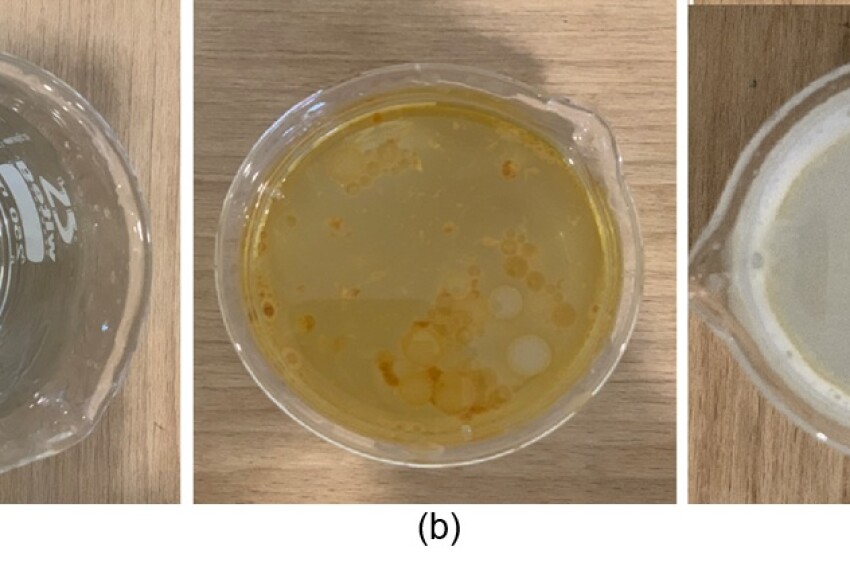
This study presents the development of a biodegradable surfactant developed using principles of environmentally friendly chemistry from natural sources. The goal is to develop an effective and environmentally friendly surfactant that can emulsify and disperse oil to reduce its effects on marine environments.

This study ascertains the capital expenditure and operating expenditure associated with the reuse of existing facilities, specifically regarding a carbon capture and storage project being prepared in South Korea.

GeoMap Europe is the latest in a series of interactive global geothermal maps that combine large subsurface and surface data sets to highlight where geothermal resources and development opportunities are strongest for power, heat, cooling, and storage.
-
Congress is close to lifting a 40-year-old ban on energy development in Alaska’s Arctic National Wildlife Refuge, but drilling for oil in that frozen wilderness may still be years away as the effort faces exhaustive environmental reviews and likely lawsuits.
-
 Public perceptions matter. The industry needs to take a proactive and solution-centric position with respect to the Paris Agreement and join the battle for the clean and affordable kilowatts of energy the markets will increasingly favor.
 -
On 23 May 2017,the Ukrainian parliament adopted the Law of Ukraine "On Environment Impact Assessment." The newly adopted law requires mandatory assessment of effect on the environment of certain industrial objects and activities.
-
Environmental Protection Agency Administrator Scott Pruitt said in his first testimony before Congress on 7 December that he plans to replace the Obama-era Clean Power Plan, instead of just killing it outright.
-
Between 2005 and 2015, energy-related carbon dioxide emissions decreased in 43 states (including the District of Columbia) and increased in 8 states. On a per capita basis, energy-related carbon dioxide emissions decreased in 49 states (including the District of Columbia) and increased in 2 states.
-
Between 2009 and 2016, SPE facilitated a series of global sessions to develop ideas for the future advancement of health, safety, and the environment in the industry. The result is the technical report “Getting to Zero and Beyond: The Path Forward.”
-
BP, Eni, ExxonMobil, Repsol, Shell, Statoil, Total, and Wintershall committed to further reduce methane emissions from the natural gas assets they operate around the world.
-
One of the big stumbling blocks when it comes to properly handling North Dakota’s substantial tonnage of radioactive wastes has been the time it takes for an accurate test of how much Radium 226 and 228 are present in a given load of the material.
-
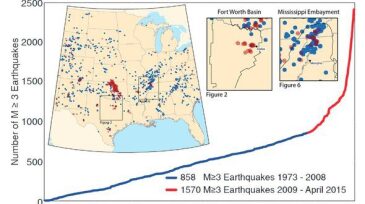
For 300 million years faults showed no activity, and then wastewater injections from oil and gas wells came along.
-
Safety barriers need to be implemented in an integrated and consistent manner in order to minimize risk, and technical, organizational, and operational aspects of the barriers need to be considered.