Environment

TotalEnergies signed off for 30% operated stakes in the Lang Lebah and B14 gas fields offshore Sarawak on the sidelines of ADIPEC in Abu Dhabi, while also highlighting methane-reduction partnerships in Angola, India, and Southeast Asia.

DNV notes that energy and industrial process-related carbon emissions will have dropped by 2050 by only 44% from today’s level, not even halfway to the net-zero pledge envisioned by the Paris climate agreement.

The Absheron gas field expansion will supply additional natural gas to Azerbaijan’s domestic market and support its export commitments to Turkey, allowing Baku to stay focused on meeting its gas export obligations to Europe.
-
 A study of a limited number of decommissioned oil and gas wells in England found no evidence of methane leaks, including four wells found to be leaking in an earlier study.
-
The Mammoth project follows the company’s proven Orca model but will scale up the CO2 capture capacity to 36,000 tons per year.
-
The deal with Manulife gives Oxy unit 1PointFive access to 27,000 acres of subsurface pore space for carbon sequestration.
-
The Texas Railroad Commission has approved its plan for fiscal year 2023, outlining priorities and highlighting enforcement efforts.
-
The House Science Committee calls for tougher surveillance amid evidence of super-emitters and undetected leaks in the vast Permian Basin.
-
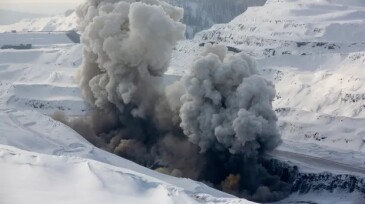
About 90 tonnes of methane an hour were released from the Raspadskaya coal mine in January, data from the GHGSat global satellite shows.
-
Chevron, Talos, and Carbonvert have finished the documentation and closed the joint venture for the carbon capture and storage project on the Gulf of Mexico coast.
-
The suite of tools includes a digital platform for sharing emissions data, an agreed set of definitions that nails down what different terms mean, a single set of metadata definitions, and an API through which users can access data. When used together, these tools provide an integrated perspective on what emissions are coming from where.
-
A trio of new satellites that use infrared sensor technology are now flying around the Earth at a speed faster than 4 miles per second.
-
Trafigura, a group of physical commodity trading companies, and Palantir Technologies announced their intent to develop a platform to calculate carbon intensity, combining the efforts of trading and digital technology to account for Scope 3 emissions. The aim is to increase transparency of life-cycle emissions and to provide benchmarking against other market participa…